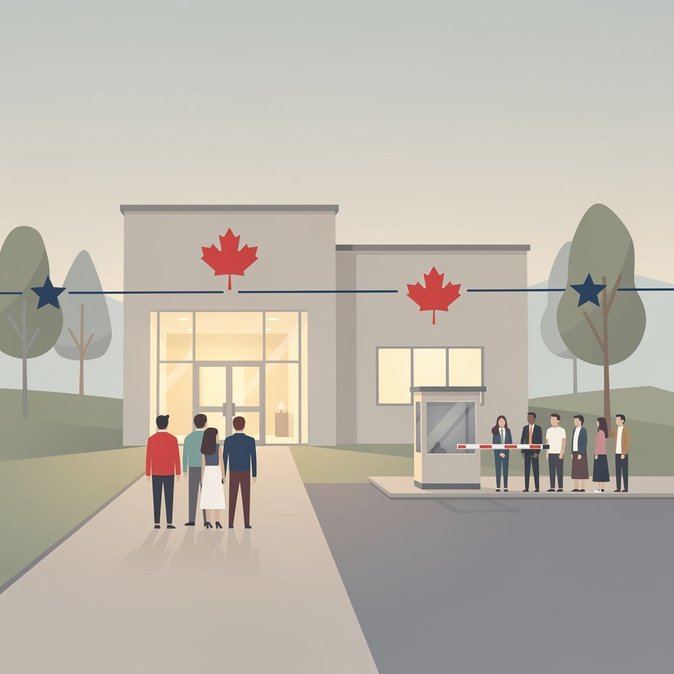
The Haskell Free Library and Opera House—famed for straddling the border between Stanstead, Quebec, and Derby Line, Vermont—has officially opened a long-awaited entrance on the Canadian side. The new doorway, inaugurated on 11 June, means Canadian patrons can once again access the building without passing through U.S. Customs after Washington ended a century-old informal exemption last year. The C$700,000 project, financed through donations and a GoFundMe campaign, includes a new sidewalk, parking area and wheelchair-accessible ramp. Library board president Sylvie Boudreau called the entrance “a symbol of practical cooperation,” noting that the building “was designed to bring two communities together, not to separate them.” For mobility stakeholders the case is a microcosm of how micro-border crossings can adapt to evolving security policies. In 2025, U.S. Customs and Border Protection cited a rise in illicit cross-border activity near the library— including a thwarted gun-smuggling attempt—when it scrapped the no-passport arrangement. The change forced Canadian visitors to drive through a staffed U.S. port of entry, an inconvenience that cut library attendance by 60 %. With the Canadian door now open, local tourism boards expect bilateral visitor numbers to rebound in time for the summer season. Small businesses on both sides of the frontier—cafés, B&Bs and antique shops—are planning joint promotions, while regional mobility managers say the fix will restore a quirky but popular detour for expatriates on assignment in Montreal and Boston. The episode underscores that even minor infrastructure tweaks can have outsized effects on community connectivity, highlighting the importance of flexible border policies that balance security with local mobility needs.
Source: Global News / Canadian Press