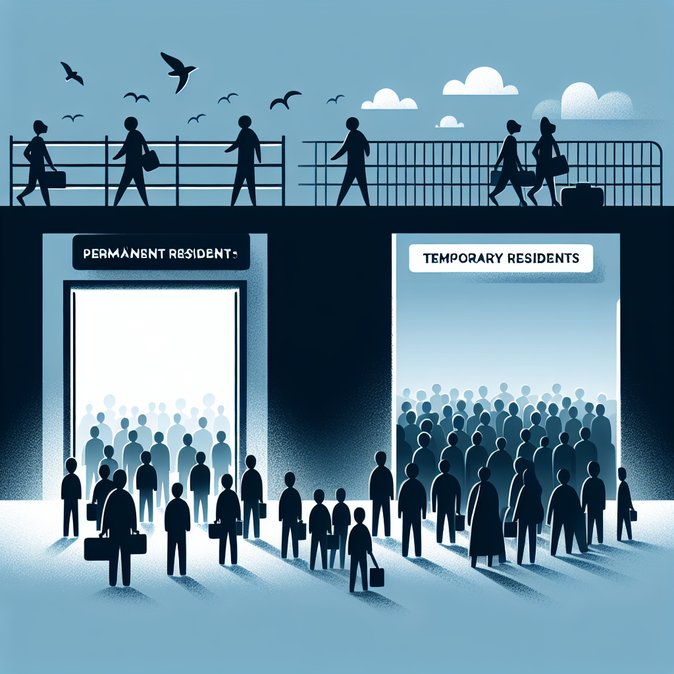
In a briefing to journalists on October 28, government officials confirmed that Immigration, Refugees and Citizenship Canada (IRCC) will table the 2026-2028 Immigration Levels Plan in Parliament no later than November 1. According to senior sources, Prime Minister Mark Carney’s government intends to keep overall permanent-resident admissions close to the 416,500 target previously announced for 2026, while introducing a firm ceiling on temporary-resident growth. That ceiling will be expressed as a share of Canada’s total population—likely around 5 percent—reflecting concerns raised by economists and provincial premiers that the post-pandemic surge in international students and work-permit holders has strained housing, health-care and transit infrastructure.
The forthcoming plan is the first major immigration policy blueprint under Prime Minister Carney, who took office in July after promising to “stabilise but modernise” Canada’s immigration system. Cabinet sources say the government will maintain the current three-year forward-planning horizon but add an annual “temporary-resident management framework” requiring IRCC to publish projections for study and work permit intakes alongside permanent-resident numbers. Ottawa is also expected to boost Francophone immigration targets and restore higher allocations to the Provincial Nominee Program (PNP) after lobbying from provinces such as Saskatchewan and New Brunswick.
For employers, a stable permanent-resident target provides predictability when planning long-term talent pipelines. However, the tighter controls on temporary residents could slow the issuance of closed work permits and lead to more stringent Labour Market Impact Assessments (LMIAs). Multinationals that rely heavily on global skills mobility—particularly in tech and health care—should review their workforce plans for 2026 now, ensuring key hires have permanent-residence strategies in place. Universities and colleges may also face smaller international-student quotas, compounding revenue pressures already created by higher cost-of-living requirements introduced earlier this year.
Policy analysts note that the Carney government is attempting to strike a delicate balance: preserving immigration’s contribution to growth and demographic renewal while cooling political backlash over housing affordability. If enacted, the temporary-resident cap would be Canada’s first since the 1970s and could set a precedent for other OECD countries grappling with similar post-pandemic labour-market dynamics. Stakeholders have until mid-November to submit feedback once the plan is tabled, and parliamentary committees are expected to scrutinise its fiscal-impact assumptions before year-end.
Practical tip: Global mobility managers should add buffer time for 2026 assignments that rely on International Mobility Program or LMIA-based work permits, and consider transferring eligible employees into Express Entry pools ahead of anticipated increases in Federal High-Skilled and PNP targets.
The forthcoming plan is the first major immigration policy blueprint under Prime Minister Carney, who took office in July after promising to “stabilise but modernise” Canada’s immigration system. Cabinet sources say the government will maintain the current three-year forward-planning horizon but add an annual “temporary-resident management framework” requiring IRCC to publish projections for study and work permit intakes alongside permanent-resident numbers. Ottawa is also expected to boost Francophone immigration targets and restore higher allocations to the Provincial Nominee Program (PNP) after lobbying from provinces such as Saskatchewan and New Brunswick.
For employers, a stable permanent-resident target provides predictability when planning long-term talent pipelines. However, the tighter controls on temporary residents could slow the issuance of closed work permits and lead to more stringent Labour Market Impact Assessments (LMIAs). Multinationals that rely heavily on global skills mobility—particularly in tech and health care—should review their workforce plans for 2026 now, ensuring key hires have permanent-residence strategies in place. Universities and colleges may also face smaller international-student quotas, compounding revenue pressures already created by higher cost-of-living requirements introduced earlier this year.
Policy analysts note that the Carney government is attempting to strike a delicate balance: preserving immigration’s contribution to growth and demographic renewal while cooling political backlash over housing affordability. If enacted, the temporary-resident cap would be Canada’s first since the 1970s and could set a precedent for other OECD countries grappling with similar post-pandemic labour-market dynamics. Stakeholders have until mid-November to submit feedback once the plan is tabled, and parliamentary committees are expected to scrutinise its fiscal-impact assumptions before year-end.
Practical tip: Global mobility managers should add buffer time for 2026 assignments that rely on International Mobility Program or LMIA-based work permits, and consider transferring eligible employees into Express Entry pools ahead of anticipated increases in Federal High-Skilled and PNP targets.