Relocation platform Jobbatical updated its benchmarking study on 13 November 2025, giving HR teams the freshest snapshot of German work-visa processing times.
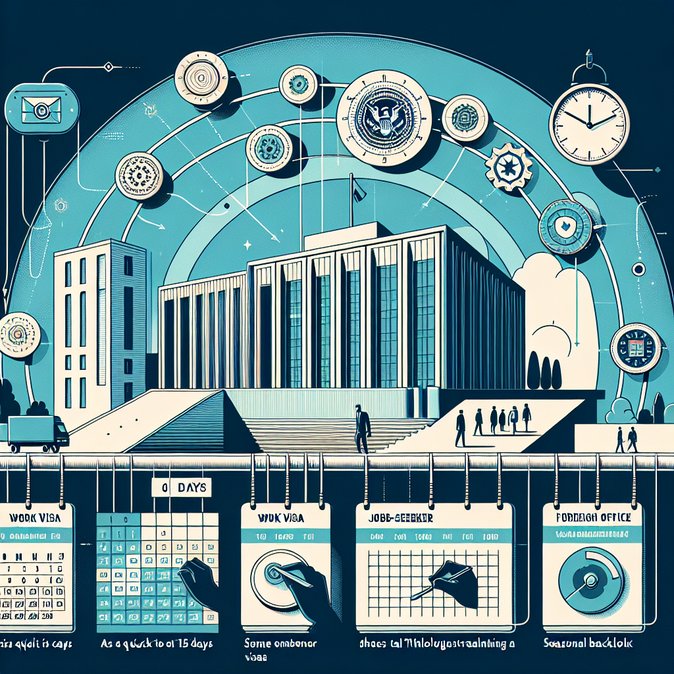
According to Jobbatical’s client data and consular statistics, most Employment, EU Blue Card and IT-Specialist visas are now issued in six to twelve weeks—unchanged from spring but considerably faster than the 14- to 20-week averages seen in 2023. The report credits expanded staffing at German consulates, particularly in India and Brazil, and the roll-out of e-file transfers to local Foreigners’ Authorities (Ausländerbehörden).
![Germany’s work-visa clock: new data show 6–12 week processing norm, AI pilot promises faster decisions]()
The study highlights three emerging trends for 2025-26. First, job-seeker visas have stabilised at four to six weeks thanks to simplified background checks. Second, seasonal spikes remain: March-June and September-December still see queues lengthen by up to 30 percent. Third—and most interesting—Berlin has begun testing an AI-supported triage tool that flags low-risk applications for “auto-clearance” within 15 days. Early pilots in Bengaluru and Manila suggest a 40 percent time saving.
For global-mobility managers, the takeaway is twofold. Projects starting in Q2 or Q4 should factor in seasonal congestion, but trusted-employer status and complete digital files can shave weeks off. Meanwhile, HRIS integration with the Foreign Office’s new API (slated for March 2026) will allow companies to receive real-time case updates—potentially ending the ‘black-box’ phase between embassy submission and residence-permit approval.
Jobbatical predicts total German work-visa volumes will rise 10 percent this year, driven by IT and engineering hires from India, Türkiye and the Philippines. Employers that can pre-screen candidates for complete documentation and German-style contracts are best placed to exploit the faster lanes.
According to Jobbatical’s client data and consular statistics, most Employment, EU Blue Card and IT-Specialist visas are now issued in six to twelve weeks—unchanged from spring but considerably faster than the 14- to 20-week averages seen in 2023. The report credits expanded staffing at German consulates, particularly in India and Brazil, and the roll-out of e-file transfers to local Foreigners’ Authorities (Ausländerbehörden).

The study highlights three emerging trends for 2025-26. First, job-seeker visas have stabilised at four to six weeks thanks to simplified background checks. Second, seasonal spikes remain: March-June and September-December still see queues lengthen by up to 30 percent. Third—and most interesting—Berlin has begun testing an AI-supported triage tool that flags low-risk applications for “auto-clearance” within 15 days. Early pilots in Bengaluru and Manila suggest a 40 percent time saving.
For global-mobility managers, the takeaway is twofold. Projects starting in Q2 or Q4 should factor in seasonal congestion, but trusted-employer status and complete digital files can shave weeks off. Meanwhile, HRIS integration with the Foreign Office’s new API (slated for March 2026) will allow companies to receive real-time case updates—potentially ending the ‘black-box’ phase between embassy submission and residence-permit approval.
Jobbatical predicts total German work-visa volumes will rise 10 percent this year, driven by IT and engineering hires from India, Türkiye and the Philippines. Employers that can pre-screen candidates for complete documentation and German-style contracts are best placed to exploit the faster lanes.
Source: Jobbatical Blog
How VisaHQ can help
VisaHQ simplifies the visa application process for individuals and businesses. Check current travel requirements, prepare the required documents and manage your application online through the VisaHQ Germany portal.More From Germany
View all
Netherlands move shines spotlight on Europe-wide internal border checks—Germany’s controls remain in force until March 2026

Berlin hosts international conference on integration and naturalisation amid end of ‘Turbo’ citizenship path