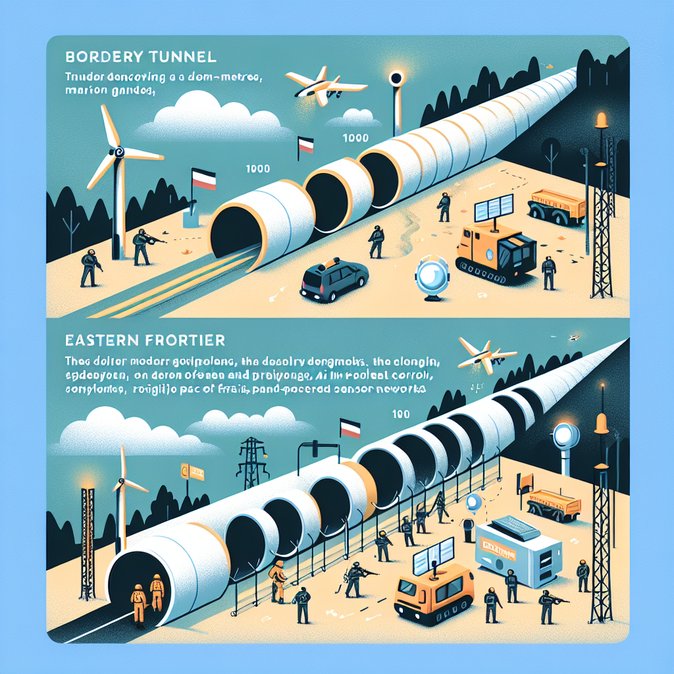
Berlin confirmed on 13 December that it will send an initial contingent of 50 Bundeswehr engineers to assist Poland’s multi-year ‘Eastern Shield’ project—an extensive programme to harden the 418-kilometre border with Belarus and Russia’s Kaliningrad enclave. The troops will arrive in April 2026 and stay through 2027, helping dig anti-tank ditches, lay barbed wire and erect concrete bunkers.
The mission is classified as non-combat, meaning no heavy weapons will accompany the soldiers and no Bundestag mandate is required. Nevertheless, it is the first time since German reunification that Bundeswehr personnel will take part in building permanent fortifications on Polish soil, illustrating heightened threat perceptions following Russia’s invasion of Ukraine.
![Germany to Deploy Engineering Troops for Poland’s ‘Eastern Shield’ Fortifications]()
For multinational companies the symbolism matters less than the practical implications: prolonged construction activity and restricted zones along key stretches could lead to intermittent closures or convoy requirements on the S19 and S61 road corridors and adjacent rail spurs. Real-estate developers eyeing projects near the Suwałki Gap will face tougher environmental and security permitting.
While civilian crossings are expected to remain open, travellers should brace for denser inspection regimes as new surveillance towers and drone patrols come online. Firms rotating staff under EU ICT permits or local contracts should build longer door-to-door times into itineraries and monitor government advisories on night-driving curfews.
The mission is classified as non-combat, meaning no heavy weapons will accompany the soldiers and no Bundestag mandate is required. Nevertheless, it is the first time since German reunification that Bundeswehr personnel will take part in building permanent fortifications on Polish soil, illustrating heightened threat perceptions following Russia’s invasion of Ukraine.

For multinational companies the symbolism matters less than the practical implications: prolonged construction activity and restricted zones along key stretches could lead to intermittent closures or convoy requirements on the S19 and S61 road corridors and adjacent rail spurs. Real-estate developers eyeing projects near the Suwałki Gap will face tougher environmental and security permitting.
While civilian crossings are expected to remain open, travellers should brace for denser inspection regimes as new surveillance towers and drone patrols come online. Firms rotating staff under EU ICT permits or local contracts should build longer door-to-door times into itineraries and monitor government advisories on night-driving curfews.
Source: VisaHQ Global Mobility News