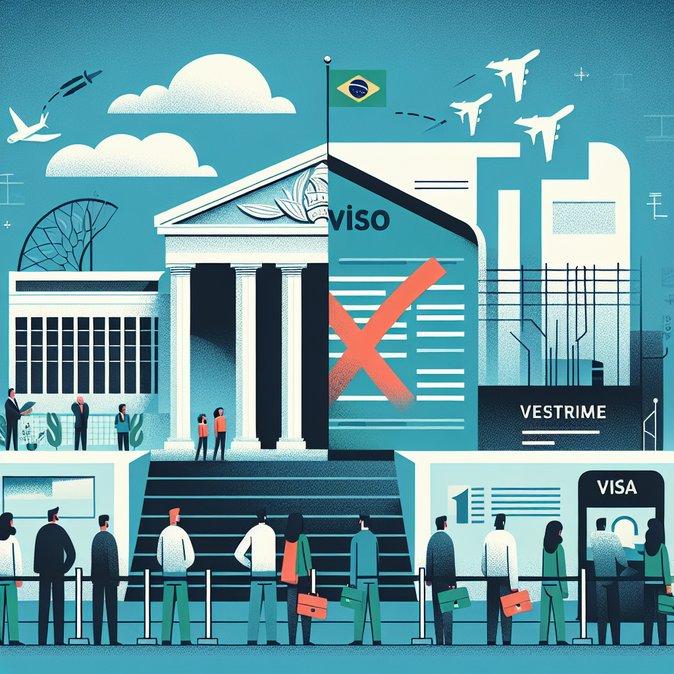
Brazil has quietly torn up a decade’s worth of nationality-specific humanitarian-visa programmes. Inter-ministerial Ordinance 14/2025, which took effect on 1 January but was only publicised on 16-17 January, revokes special schemes for Afghans, Haitians, Ukrainians and several other groups. In their place the Justice and Foreign Affairs ministries created a single, umbrella framework that will operate via a rolling list of eligible nationalities published by simple decree. Until that first list appears, no one qualifies.
The practical consequence is an immediate stand-still. Consulates have stopped accepting new humanitarian-visa applications and Brazil’s online portal (SEI/MigranteWeb) no longer generates protocol numbers. NGOs say dozens of family-reunification cases—many for Afghan and Haitian relatives—were stranded mid-process overnight. Employers that regularised workers under the old programmes now face a compliance gap when their staff try to renew CRNM residence cards.
![Brazil scraps nationality-specific humanitarian visas, freezing new filings]()
Immigration lawyers are advising companies to audit humanitarian-status employees and, where possible, shift them to Mercosur, digital-nomad or standard work-permit categories. They also recommend building extra lead-time into onboarding plans for 2026: even if a nationality list is released soon, consular backlogs are likely.
From a policy perspective, the government argues that a single framework will be nimbler during crises—able to add or drop countries quickly without rewriting multiple ordinances. Critics counter that, in the interim, Brazil risks losing credibility as a humanitarian haven and may push vulnerable migrants toward irregular routes.
For mobility managers the message is clear: monitor daily for the first eligibility list, prepare alternative visa strategies, and communicate proactively with affected assignees to avoid last-minute travel or renewal disruptions.
The practical consequence is an immediate stand-still. Consulates have stopped accepting new humanitarian-visa applications and Brazil’s online portal (SEI/MigranteWeb) no longer generates protocol numbers. NGOs say dozens of family-reunification cases—many for Afghan and Haitian relatives—were stranded mid-process overnight. Employers that regularised workers under the old programmes now face a compliance gap when their staff try to renew CRNM residence cards.

Immigration lawyers are advising companies to audit humanitarian-status employees and, where possible, shift them to Mercosur, digital-nomad or standard work-permit categories. They also recommend building extra lead-time into onboarding plans for 2026: even if a nationality list is released soon, consular backlogs are likely.
From a policy perspective, the government argues that a single framework will be nimbler during crises—able to add or drop countries quickly without rewriting multiple ordinances. Critics counter that, in the interim, Brazil risks losing credibility as a humanitarian haven and may push vulnerable migrants toward irregular routes.
For mobility managers the message is clear: monitor daily for the first eligibility list, prepare alternative visa strategies, and communicate proactively with affected assignees to avoid last-minute travel or renewal disruptions.
Source: VisaHQ