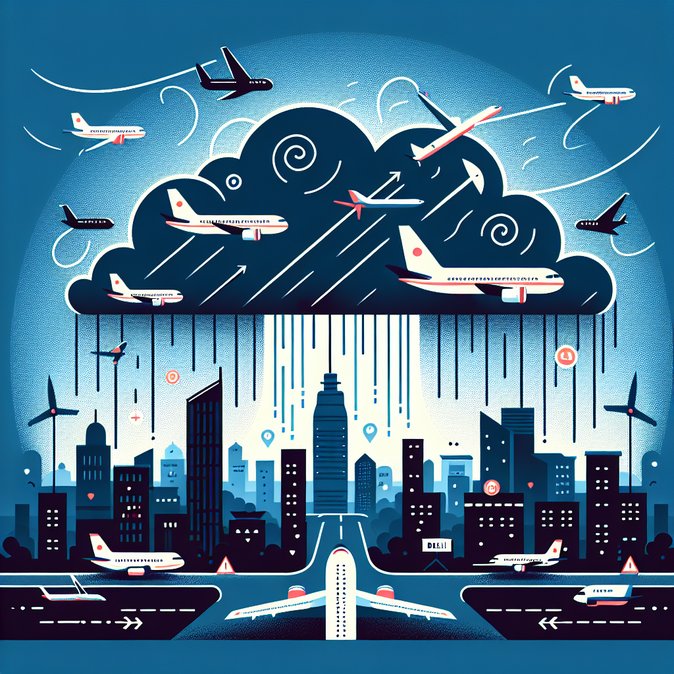
A winter storm swept across the National Capital Region on 27 January, bringing squalls that triggered a red-alert from the India Meteorological Department (IMD) and forced airlines to delay or divert dozens of flights at Indira Gandhi International Airport (DEL).
1. Operational impact
• Between 12:00 and 16:00 IST more than 90 departures were delayed and eight inbound flights diverted to Jaipur and Lucknow.
• Akasa Air, IndiGo and SpiceJet activated social-media and SMS advisories urging passengers to allow extra travel time and to monitor flight-status pages.
• Runway 28/10 was closed intermittently for low-visibility procedures; CAT-III-equipped Runway 29L remained operational but at reduced capacity.
![Delhi airport operations hit by severe storm; airlines issue real-time travel advisories]()
2. Traveller guidance
Corporate travel managers should advise employees transiting DEL to build in at least a four-hour buffer for connections this week, as residual delays cascade through the network. Flexi-fare tickets and same-day change options can mitigate disruption.
3. Broader context
Weather-related disruptions are a perennial mobility risk in North India’s winter season, but 2026 has seen an uptick: IMD data show five red-alert events so far, versus two in the same period last year. Airlines have begun integrating IMD API feeds into their passenger apps to push hyper-local alerts.
4. Practical take-away
HR and mobility teams moving expatriates or short-term assignees through Delhi should validate hotel “walk” agreements and ensure that travel insurance covers weather-induced delays, which some basic policies exclude.
1. Operational impact
• Between 12:00 and 16:00 IST more than 90 departures were delayed and eight inbound flights diverted to Jaipur and Lucknow.
• Akasa Air, IndiGo and SpiceJet activated social-media and SMS advisories urging passengers to allow extra travel time and to monitor flight-status pages.
• Runway 28/10 was closed intermittently for low-visibility procedures; CAT-III-equipped Runway 29L remained operational but at reduced capacity.

2. Traveller guidance
Corporate travel managers should advise employees transiting DEL to build in at least a four-hour buffer for connections this week, as residual delays cascade through the network. Flexi-fare tickets and same-day change options can mitigate disruption.
3. Broader context
Weather-related disruptions are a perennial mobility risk in North India’s winter season, but 2026 has seen an uptick: IMD data show five red-alert events so far, versus two in the same period last year. Airlines have begun integrating IMD API feeds into their passenger apps to push hyper-local alerts.
4. Practical take-away
HR and mobility teams moving expatriates or short-term assignees through Delhi should validate hotel “walk” agreements and ensure that travel insurance covers weather-induced delays, which some basic policies exclude.
Source: Hindustan Times