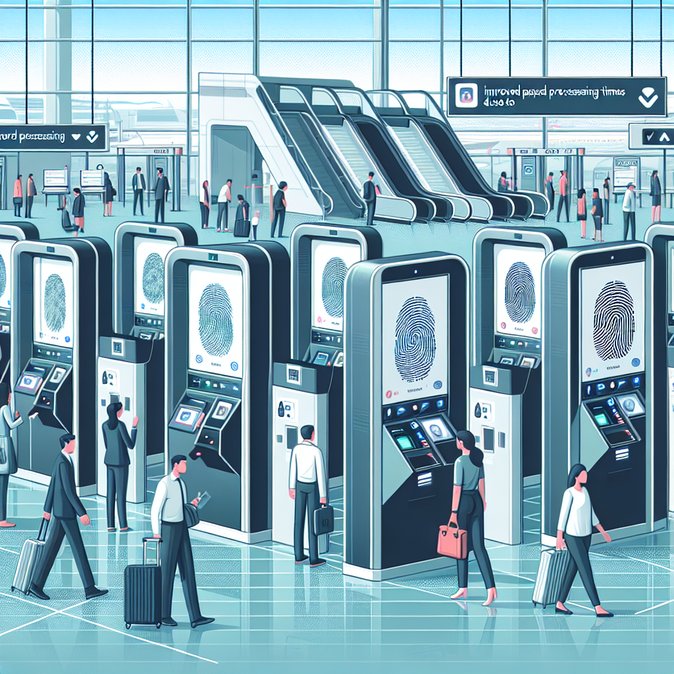
As millions of Brazilians prepared to travel abroad for the extended Carnival break, the Federal Police (PF) announced on 22 February 2026 that average passport-issuance times had fallen to an unprecedented 2.4 working days nationwide, with same-day delivery available at 11 priority service centers. The figures—released in an operational bulletin circulated to travel agencies—represent a 35 % improvement over the 2025 Carnival period and cap a two-year digital-modernization program partially financed by a World Bank public-sector loan. Key to the acceleration was the full rollout, on 15 February, of the PF’s new biometric-capture kiosks. Installed at airports in São Paulo (GRU), Rio de Janeiro (GIG), Brasília (BSB) and Recife (REC), the kiosks allow applicants who have pre-submitted data online to complete fingerprinting and photo capture in under three minutes and receive their passports by courier within 24 hours. According to PF data, 62 % of the 48,700 passports issued between 15 and 21 February were processed through the kiosk channel, freeing up back-office staff to clear older applications. For travel managers the faster turnaround is more than a Carnival convenience. Corporations that routinely move executives on short notice—particularly in oil & gas, agribusiness and IT services—report that emergency-business-passport requests are now approved in 48 hours instead of the previous five-day norm. The American Chamber of Commerce in Brazil told members that the improvement “removes a chronic pain point” as companies adjust to stricter U.S. immigrant-visa processing times introduced in January. The PF said the upgrade forms part of a broader “Seamless Mobility” agenda that will also overhaul the Foreigner Registration Certificate (CRNM) process by integrating appointment scheduling with the gov.br digital-ID wallet later this year. Officials added that lessons learned from the Carnival surge will inform planning for the July tourist peak, when Brazil expects a wave of North American and European visitors drawn by the newly expanded flight network and a weaker real.