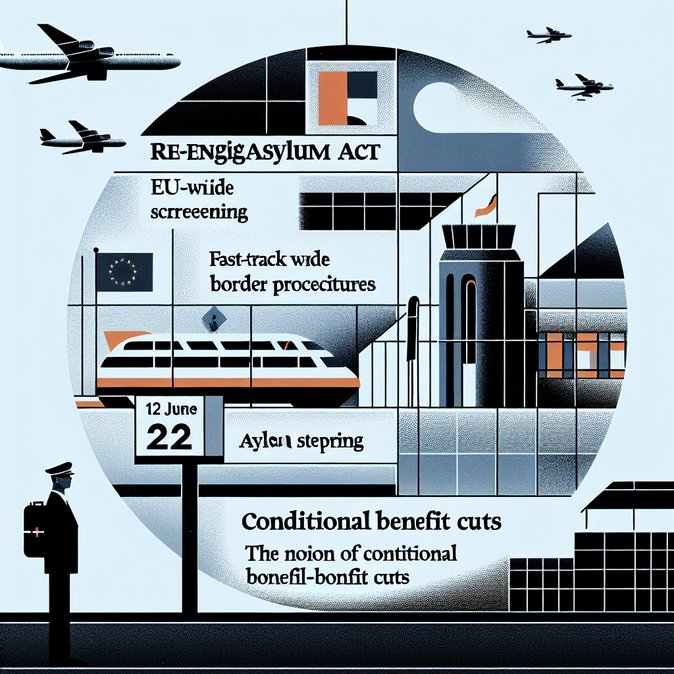
On 30 April the federal government published the long-awaited overhaul of the Asylum Act, transposing the reformed Common European Asylum System into national law. Most provisions enter into force on 12 June 2026 and will affect how humanitarian arrivals are processed at borders, airports and inland reception centres. Key change #1 is a mandatory screening phase that captures identity, health and security data in a shared EU database before a full asylum application can be filed. This harmonises Germany’s practice with neighbouring states and is expected to cut duplicate registrations. Key change #2 introduces an eight-week “border procedure” for cases deemed manifestly unfounded or outside Germany’s jurisdiction. Claimants may be held in dedicated facilities near the frontier while their case is decided, with a maximum stay of 12 weeks in exceptional circumstances. Families with minors and unaccompanied children benefit from shorter six-week timelines and tailored accommodation standards. Third, asylum-seekers gain statutory access to free legal advice provided by the Federal Office for Migration and Refugees. The right to take up employment is liberalised: work may be authorised after three months in most situations, or six months for applicants transferred from another EU state. Finally, benefit payments can be curtailed for applicants who violate residence rules or have already received protection in another member state—a move Berlin argues will deter “benefit shopping”. NGOs warn that vulnerable groups could face hardship without robust safeguards. Corporate mobility teams should track the Act’s impact on dependent family members of foreign staff and on workforce planning for humanitarian hires. Border authorities will start training on the new digital screening tools in May.
Source: Migrando.de