Visa-free policies drive record-high foreign arrivals during China’s May Day break
Dubai Airports scales up capacity as normal air traffic resumes
Germany’s Interior Minister doubles down on internal border checks despite legal push-back
Latest News

Poland Opens Online Applications for 3-Year ‘CUKR’ Residence Cards for Ukrainians
From 4 May 2026, Ukrainians in Poland can apply on-line for a three-year CUKR residence card via the new MOS portal. The card transforms temporary-protection status into a full temporary-residence permit with free access to the labour market and Schengen travel rights, offering companies a stable legal basis to retain Ukrainian staff. Applications are 100 % digital, removing the need for in-person appointments and signalling Poland’s broader move toward paperless immigration.

U.S. lifts visa processing freeze for foreign-trained doctors
DHS has lifted the visa-processing freeze that since January had stalled H-1B, J-1 and green-card petitions for foreign doctors. Hospitals and medical associations warned the freeze was worsening the national physician shortage. Normal adjudication resumes immediately, though heightened security screening remains. The shift eases staffing pressures for U.S. health-care employers and signals that national-interest arguments can still influence the administration’s restrictive immigration agenda.

Canada fast-tracks permanent residence for 33,000 rural workers under one-time TR-to-PR initiative
IRCC has begun accelerating up to 33,000 permanent-residence applications from temporary workers who have lived in smaller Canadian communities for at least two years. Drawn from existing inventories, the workers applied through regional economic programs such as the PNP and Atlantic Immigration Program. The measure addresses rural labour shortages and supports Ottawa’s plan to reduce Canada’s temporary-resident share below 5 % by 2027.

'No to 10 Million' referendum gains momentum as new poll shows 52 % support
A new Tamedia survey released on 4 May shows 52 % of voters intend to approve the SVP’s ‘No to 10 Million’ initiative on 14 June, signalling a real possibility that Switzerland could soon impose hard caps on foreign residents. Business lobby groups warn the measure would breach EU free-movement rules and create acute skills shortages. Companies should assess workforce-planning scenarios now.

UAE fully reopens its airspace after months-long conflict disruption
The GCAA has lifted all conflict-related airspace restrictions, restoring normal routing for airlines serving the UAE. The decision eliminates costly detours, slashes block times and paves the way for carriers to rebuild their pre-war schedules. For businesses, it means faster connections through Dubai and Abu Dhabi and a smoother summer travel season.

'Spaniards-first' plan sparks backlash from Spanish government
Spain’s Socialist government condemned PP and Vox regional deals that would give citizens priority over foreigners for housing and benefits, calling the plan illegal and socially divisive. The cabinet will draft nationwide legislation to safeguard equal access, while mobility professionals worry about delays and perception risks for foreign assignees.

Australia tightens student visa rules, Indian approval rate tumbles below 50 percent
New DHA figures show offshore higher-education student-visa grant rates have plunged to a 20-year low, with only 49 percent of Indian and 27 percent of Nepalese applicants approved in March. Analysts attribute the slump to tougher risk weightings, stricter financial checks and a doubling of the graduate-visa fee. Universities face recruitment headaches and employers may see fewer graduate-visa holders, underscoring the wider economic impact of Australia’s integrity-driven visa reset.
Finland presses Kyiv after drones again stray into Finnish airspace
Two drones violated Finnish airspace near Kotka–Hamina on 3 May. Prime Minister Petteri Orpo has asked Ukraine to prevent repeat incidents, while the military imposed temporary flight restrictions but refrained from shooting the UAVs down. The case underscores rising border-security tensions and could affect aviation routings and corporate travel risk assessments.

EU grants member states—including Belgium—a temporary pause on biometric border checks to clear EES congestion
The European Commission has given Schengen states, including Belgium, permission to skip fingerprint and facial-recognition scans at the border whenever EES queues become unmanageable. Belgium’s airports and ports can revert to manual passport stamps, a move expected to shorten wait times and reduce missed flight connections for business travellers. Firms should still budget extra transit time until data confirm smoother flows, and must keep an eye on future milestones such as ETIAS in October 2026.

Brazil sets deadlines for nationwide biometric registration and new digital ID card
Brazil will make its new digital identity card (CIN) mandatory: social-benefit recipients must enrol biometrics and obtain the card by 31 December 2026, while all others have until January 2028. The CIN will replace state-level RGs, use the CPF as a single identifier and be accepted across Mercosur, promising faster visa and residence processing. Companies should update mobility procedures and alert employees and dependants to the new timeline.

Ottawa opens consultation to merge Express Entry’s three streams into a single Federal High-Skilled Class
IRCC is consulting on a plan to merge the FSWP, CEC and FSTP into one Federal High-Skilled Class and to overhaul CRS scoring. The public has until May 24 to respond. If adopted, the change would be the biggest redesign of Express Entry since 2015, with significant implications for employers’ global-talent strategies and for candidates now relying on French, study-in-Canada or spousal points.

Zurich Airport flight movements surpass pre-pandemic levels for first time in 2026
Flight movements at Zurich Airport rose 5.2 % year-on-year in April and, for the first time in 2026, topped the same month in 2019. The rebound, driven by strong European demand and smart fleet reallocations by SWISS, signals tighter capacity and possible future green levies for business travellers.
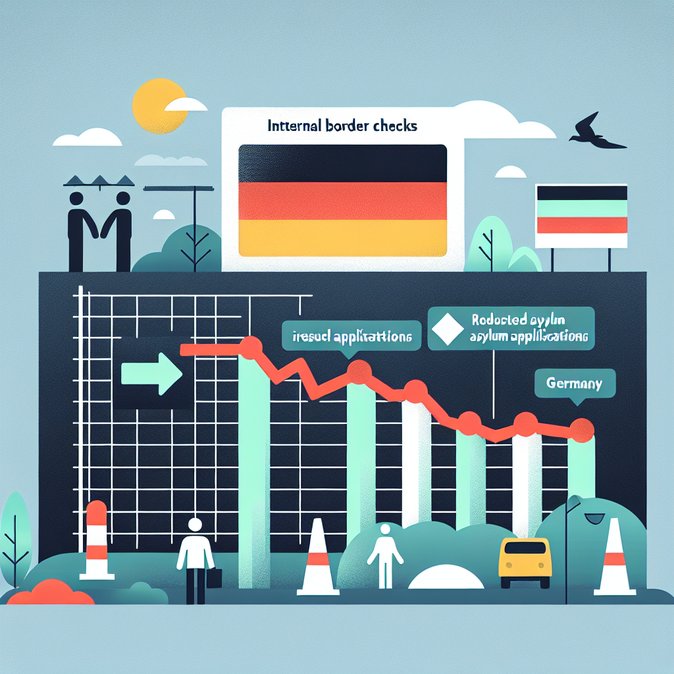
Asylum claims fall but Berlin says border controls will stay ‘for the foreseeable future’
Europa Press and DPA report that Germany will keep internal border checks despite April asylum applications falling almost one-third year-on-year. The announcement signals continued document inspections for business travellers and relocating staff and keeps legal pressure on Berlin ahead of an EU review in September.