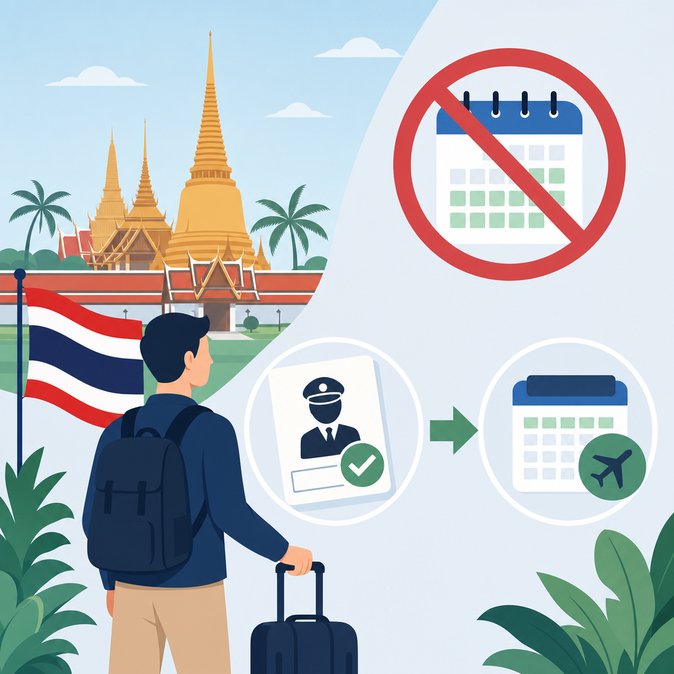
Thailand’s cabinet has formally ended the 60-day visa-exemption scheme (known locally as P.60) for passport holders from 93 nations—including Brazil—returning them to a standard 30-day visa-free stay. The measure, adopted on 20 May, will take effect once published in the Royal Gazette and communicated to airlines and border officers. The rollback is part of a broader effort by Bangkok to streamline overlapping entry categories and tighten monitoring of long-stay visitors who may be working illegally. Under the new rules, Brazilians arriving for tourism will receive a 30-day stamp on arrival, identical to the policy in effect before the COVID-era stimulus that temporarily doubled the allowance to reignite travel demand. Travellers needing longer stays—for business set-ups, filming, remote work or medical treatment—will have to apply for the appropriate visa or seek an extension from Thai immigration once in the country. For Brazilian corporates, the change removes a convenient buffer that had allowed executives to string together back-to-back meetings, site visits and leisure time over two months without extra paperwork. Mobility teams should audit upcoming trips scheduled for June onward: arriving after the Gazette publication means itineraries exceeding 30 days will require advance visas or mid-trip extensions in Thailand. Airlines will be expected to enforce the shorter stay at check-in, and overstays incur daily fines of THB 500 (about US$14), capped at THB 20,000. Thai tourism officials insist the tighter window will not dent arrivals because most visitors stay fewer than 14 days. Yet for Brazil’s small but growing medical-tourism and digital-nomad segments, the decision adds cost and administrative friction. Travel-risk advisers recommend updating traveller-communication templates and reminding employees that passport validity of six months and proof of onward travel remain mandatory.
Source: The Nation (Thailand)