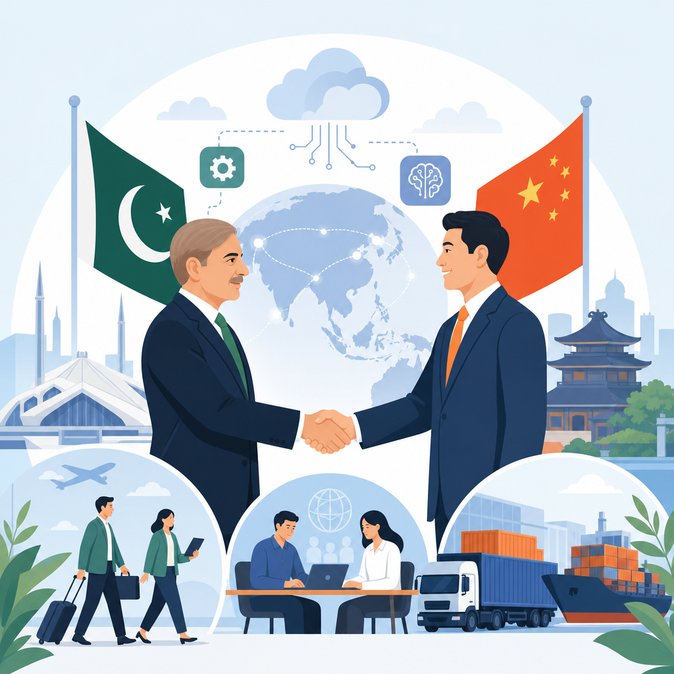
During Pakistani Prime Minister Shehbaz Sharif’s state visit, officials gathered at Alibaba Group’s Hangzhou campus on 24 May to ink a long-term cooperation agreement aimed at bolstering cloud computing, logistics and cross-border e-commerce between the two countries. While the headline items focus on data centres and artificial-intelligence tools, mobility specialists say the pact’s trade-facilitation chapter could streamline the movement of Pakistani technicians and Chinese implementation teams under the Belt & Road Initiative’s digital corridor. Alibaba chairman Joe Tsai pledged to help Pakistan digitise customs clearance, payment gateways and SME export platforms. Chinese and Pakistani negotiators confirmed that a joint committee will map out “green-lane” entry arrangements for accredited engineers, product specialists and start-up founders who need to shuttle frequently between Karachi, Islamabad and tech hubs such as Hangzhou and Shenzhen. These measures dovetail with Beijing’s recently expanded 30-day visa-free policy for business visitors from Belt & Road partner countries, potentially accelerating project mobilisation. For multinational firms that rely on Sino-Pak manufacturing chains—textiles, electronics assembly and agricultural tech—the prospect of faster on-site troubleshooting and prototyping is significant. Industry associations expect the agreement to trigger a spike in bilateral business-travel demand; airlines already report near-full load factors on the Karachi-Urumqi and Islamabad-Beijing routes through July. Compliance teams should monitor forthcoming guidelines on recognition of Pakistani professional qualifications in China and vice-versa, as well as any new fast-track application channels embedded in the National Immigration Administration’s “12367” platform.
Source: UrduPoint / APP