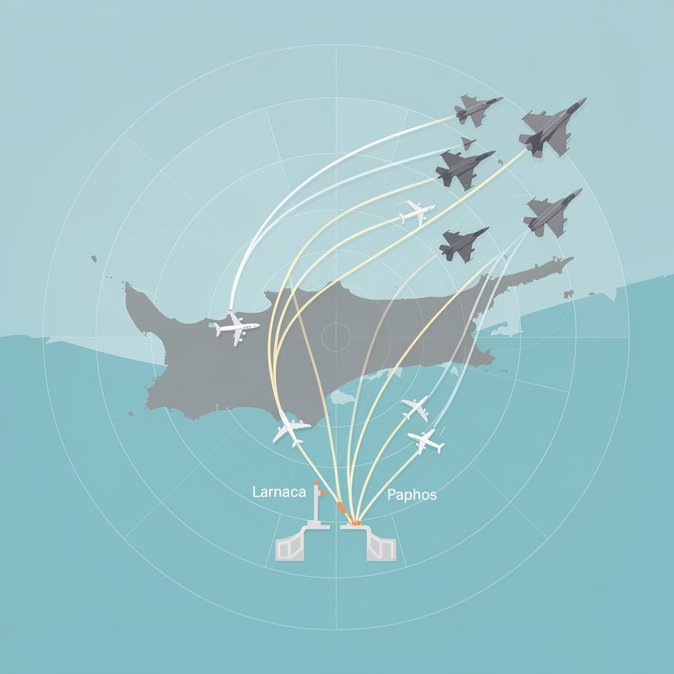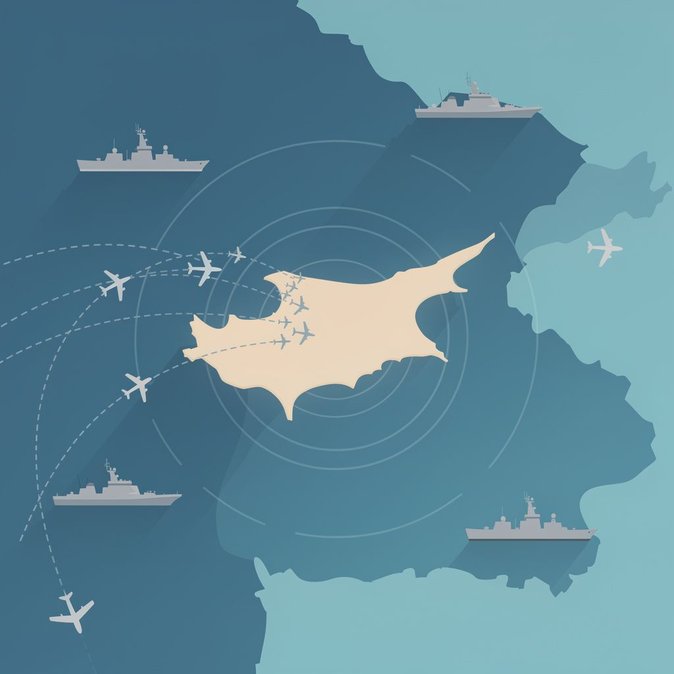
The government of the Republic of Cyprus has taken the unusual step of formally protesting to the United Nations after recording what it says are 520 separate violations of its national airspace during the three-month period from March 1 to May 31, 2026. In a letter delivered to Secretary-General António Guterres on 25 June, Cyprus’ permanent representative Maria Michael said the incidents involved Turkish F-16 fighter jets, attack helicopters and a growing fleet of Bayraktar and Akinci unmanned combat drones that repeatedly entered the Nicosia Flight Information Region without clearance. She also listed 23 naval incursions by Turkish war-ships into Cypriot territorial waters.
Amid heightened tensions, travellers and mobility managers may need extra certainty around documentation. VisaHQ’s Cyprus portal (https://www.visahq.com/cyprus/) provides real-time guidance on visa requirements, processing times and supporting documents, streamlining applications for individuals and corporate teams and helping avert last-minute travel disruptions.
Although such violations are not new, diplomats note that the volume has surged in 2026 and now averages almost six per day. Cypriot officials argue that the flights have safety implications for civil aviation using Larnaca and Paphos airports and create uncertainty for airlines planning summer schedules. The complaint comes just as carriers ramp up frequencies to Cyprus for the high season, meaning any deterioration in the security environment could force costly reroutings or insurance surcharges. The protest letter frames the incursions as a direct challenge to Cyprus’ sovereignty and an obstacle to confidence-building measures aimed at restarting reunification talks on the divided island. Analysts say the move is designed to keep the issue on the Security Council’s agenda ahead of the renewal of the UN peacekeeping mandate in July, but it also signals Nicosia’s determination to use every diplomatic lever to deter further Turkish military activity. For businesses, the development is a reminder that geopolitical risk remains a material factor when planning travel and assignment policies for staff based in, or transiting through, Cyprus. Companies with regional mobility programmes are advised to review travel-risk insurance and ensure crisis-response plans cover potential air-space closures or NOTAMs. Meanwhile, flight-planning teams should monitor Eurocontrol updates for any tactical restrictions that may be issued if tensions escalate. More broadly, the episode underlines how air-space sovereignty disputes can quickly intersect with commercial aviation and global mobility. Similar patterns are visible elsewhere in the Eastern Mediterranean, suggesting that advance contingency planning is now an essential part of corporate travel management.
Amid heightened tensions, travellers and mobility managers may need extra certainty around documentation. VisaHQ’s Cyprus portal (https://www.visahq.com/cyprus/) provides real-time guidance on visa requirements, processing times and supporting documents, streamlining applications for individuals and corporate teams and helping avert last-minute travel disruptions.
Although such violations are not new, diplomats note that the volume has surged in 2026 and now averages almost six per day. Cypriot officials argue that the flights have safety implications for civil aviation using Larnaca and Paphos airports and create uncertainty for airlines planning summer schedules. The complaint comes just as carriers ramp up frequencies to Cyprus for the high season, meaning any deterioration in the security environment could force costly reroutings or insurance surcharges. The protest letter frames the incursions as a direct challenge to Cyprus’ sovereignty and an obstacle to confidence-building measures aimed at restarting reunification talks on the divided island. Analysts say the move is designed to keep the issue on the Security Council’s agenda ahead of the renewal of the UN peacekeeping mandate in July, but it also signals Nicosia’s determination to use every diplomatic lever to deter further Turkish military activity. For businesses, the development is a reminder that geopolitical risk remains a material factor when planning travel and assignment policies for staff based in, or transiting through, Cyprus. Companies with regional mobility programmes are advised to review travel-risk insurance and ensure crisis-response plans cover potential air-space closures or NOTAMs. Meanwhile, flight-planning teams should monitor Eurocontrol updates for any tactical restrictions that may be issued if tensions escalate. More broadly, the episode underlines how air-space sovereignty disputes can quickly intersect with commercial aviation and global mobility. Similar patterns are visible elsewhere in the Eastern Mediterranean, suggesting that advance contingency planning is now an essential part of corporate travel management.