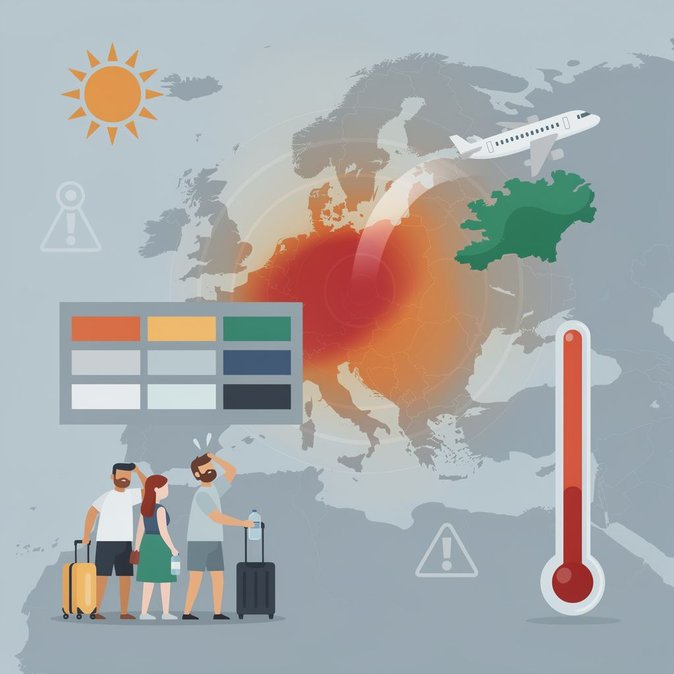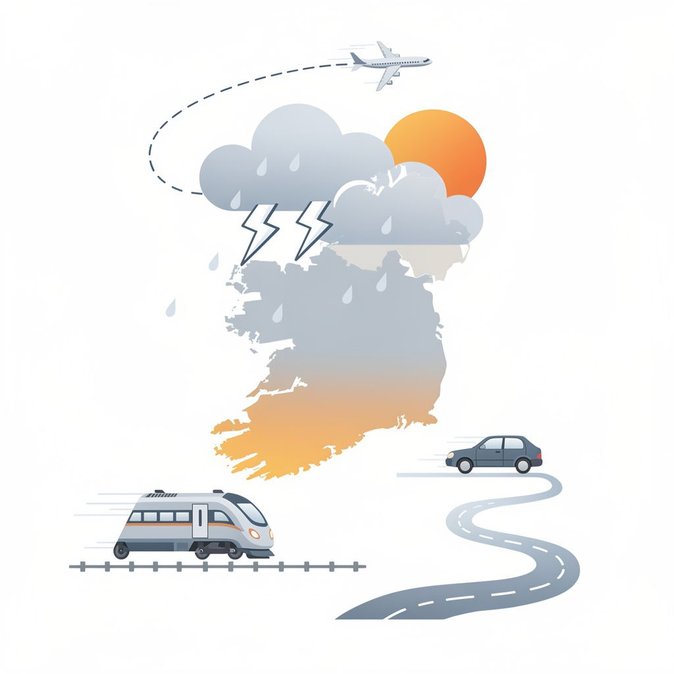
Met Éireann has escalated its weather alerts to Status Orange for Cork, Kerry and Waterford this afternoon (25 June), warning of severe thunderstorms, flooding and gusts. Status Yellow thunderstorm warnings remain for much of Connacht and Donegal, while a nationwide Yellow high-temperature advisory—daytime highs above 27 °C and tropical nights—continues until Saturday morning. The timing coincides with peak outbound traffic at Dublin and Cork airports and the start of the busy European business-conference season. Airport operators have activated wet-weather contingency rosters; lightning holds of even 30 minutes can cascade into multi-hour delays under current slot constraints. Road and rail operators are also bracing for disruption. Transport Infrastructure Ireland has pre-positioned flood-response crews on the N25 and N7 corridors frequently used by airport coaches, and Irish Rail is monitoring track-bed temperatures on intercity routes to Shannon Foynes Port. Business-traveller insurance providers remind clients that weather-related delays within the EU fall outside EU261 compensation unless the carrier could reasonably have avoided them. For employers, the practical advice is to build in extra connection time for flights through late Friday and to encourage remote participation for meetings where feasible. Client-facing staff should carry physical water supplies and factor in potential road-closures around low-lying industrial zones, particularly in Cork Harbour. Met Éireann will update alerts regularly; mobility managers should subscribe to push notifications and ensure travellers have access to real-time ground-transport alternatives.
Source: Met Éireann