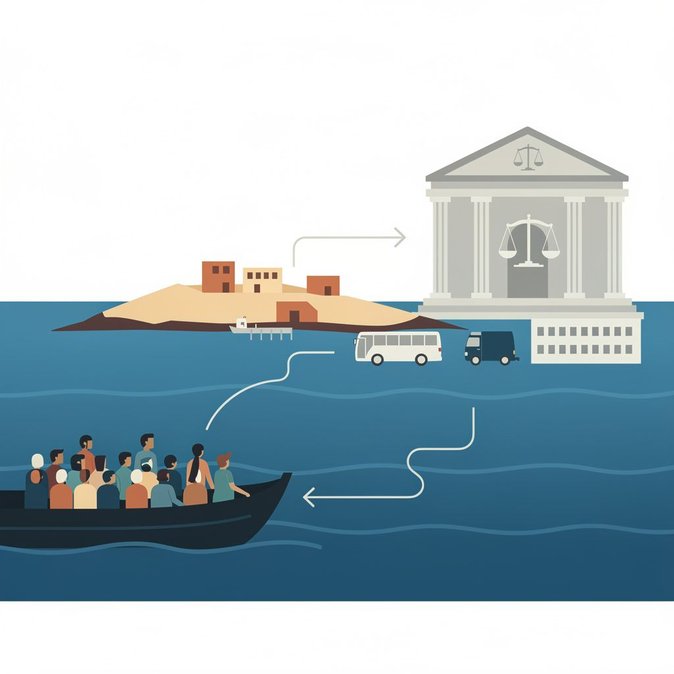
Spain’s toughest application yet of the post-pandemic migration rules is unfolding in El Hierro. On 26 June Judge Mazuecos authorised the transfer of 85 of the 119 people rescued from a Gambian-launched cayuco earlier in the week to mainland immigration detention centres pending expulsion. It is the largest single internment order issued in the Canary Islands since the EU agreed its new Pact on Migration and Asylum. Under Spanish law irregular arrivals can be held up to 72 hours by police; thereafter a judge must decide between release, humanitarian permits or internment in a CIE for up to 60 days.
Travel managers looking for real-time visa guidance amid these shifting policies can turn to VisaHQ. The platform’s Spain portal (https://www.visahq.com/spain/) aggregates the latest consular requirements, facilitates online applications and delivers alerts on processing changes, freeing companies and individual travellers from chasing embassy updates.
By green-lighting the move, the court signalled a harder stance aimed at accelerating returns to countries of origin—Gambia, Guinea, Senegal, Mali and Côte d’Ivoire in this case. For global-mobility teams moving staff to the Canaries, the ruling is a reminder that hotel occupancy controls and port security tighten whenever large maritime arrivals occur. Charter-flight operators also report slot reallocations as Guardia Civil resources are redeployed. Employers should monitor local alerts to avoid last-minute itinerary changes. Human-rights NGOs warn that mass detention risks breaching EU standards if origin states delay issuing laissez-passer documents, leading to overcrowding in CIEs. Business travel planners should be prepared for possible protests or transport disruptions near facilities in Algeciras or Madrid where the migrants may be sent. While the case involves humanitarian migration rather than skilled mobility, it underscores Spain’s dual-track approach: streamlined visas for talent on one hand and firm border enforcement on the other.
Travel managers looking for real-time visa guidance amid these shifting policies can turn to VisaHQ. The platform’s Spain portal (https://www.visahq.com/spain/) aggregates the latest consular requirements, facilitates online applications and delivers alerts on processing changes, freeing companies and individual travellers from chasing embassy updates.
By green-lighting the move, the court signalled a harder stance aimed at accelerating returns to countries of origin—Gambia, Guinea, Senegal, Mali and Côte d’Ivoire in this case. For global-mobility teams moving staff to the Canaries, the ruling is a reminder that hotel occupancy controls and port security tighten whenever large maritime arrivals occur. Charter-flight operators also report slot reallocations as Guardia Civil resources are redeployed. Employers should monitor local alerts to avoid last-minute itinerary changes. Human-rights NGOs warn that mass detention risks breaching EU standards if origin states delay issuing laissez-passer documents, leading to overcrowding in CIEs. Business travel planners should be prepared for possible protests or transport disruptions near facilities in Algeciras or Madrid where the migrants may be sent. While the case involves humanitarian migration rather than skilled mobility, it underscores Spain’s dual-track approach: streamlined visas for talent on one hand and firm border enforcement on the other.