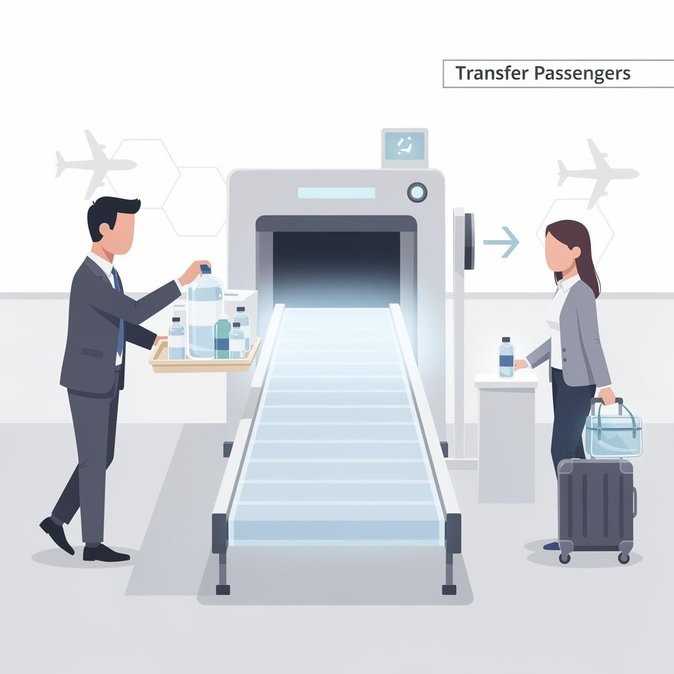
Zurich Airport has quietly become one of Europe’s most passenger-friendly hubs after scrapping the long-standing “100 millilitres in a 1-litre bag” rule for travellers who start their journey in Zurich. As of Friday, 26 June 2026, security lanes equipped with next-generation CT scanners can analyse the molecular composition of liquids in real time, allowing containers of up to two litres to remain inside hand luggage. Only double-walled thermos bottles must still be empty. The change puts Switzerland ahead of most Schengen partners; London City, Amsterdam Schiphol and several Spanish airports introduced similar technology earlier this year, but few match Zurich’s generous limit. It comes after a CHF 50 million investment programme that replaced all 26 checkpoint lanes over two years without daytime closures, according to airport operator Flughafen Zürich AG. Project manager Roman Jung told local media that the upgrade cuts average queuing times by 40 percent and halves the number of secondary bag searches. For business travellers, the practical benefits are immediate. Liquid medication, presentation samples, and even wine gifts for clients can now travel in cabin bags, eliminating the wait at baggage reclaim and the risk of lost check-in luggage on tight connections. Frequent-flyer forums report that security-control throughput during Sunday’s morning peak improved from 1650 to nearly 2400 passengers per hour. Important caveats remain. The relaxed rule currently applies only to *originating* passengers screened in the central security building; transfer passengers re-entering the sterile zone from gates D and E must still comply with the standard 100 ml restriction until those checkpoints are retro-fitted in 2027. Travellers returning to Zurich from abroad should also verify the liquids policy at their departure airport to avoid confiscations on the inbound leg. Corporate travel managers are updating packing guidelines and reminding staff to retain purchase receipts: under Swiss VAT rules, goods bought airside remain tax-exempt only if exported within 30 days. Airlines meanwhile expect a small reduction in hold-baggage volumes—and thus faster turnaround times—once passengers adapt to the new convenience.
Source: Zurich Airport