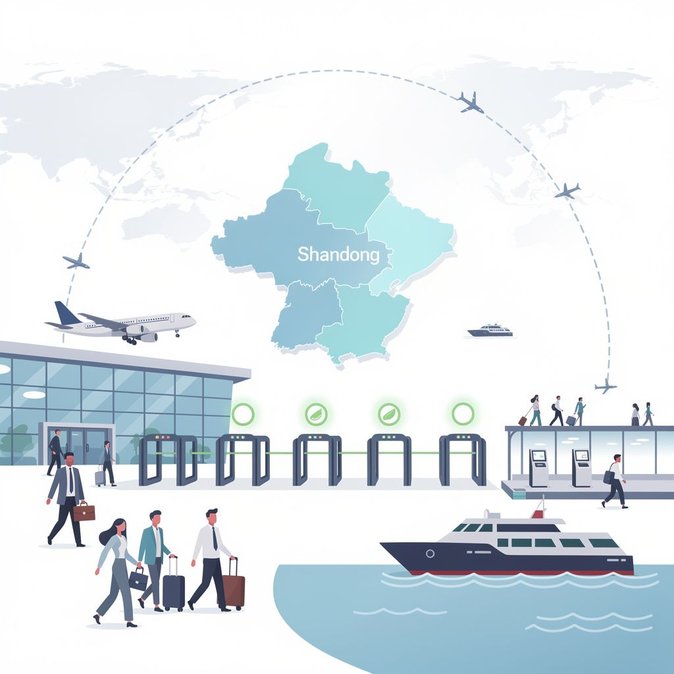
Provincial border-inspection data released on July 4 highlight the speed at which second-tier Chinese regions are benefiting from Beijing’s unilateral visa-waiver. Shandong—home to ports such as Qingdao, Yantai and Weihai—recorded 3.52 million inbound and outbound trips in the first half of 2026, up 13 percent on the same period last year. Of the 1.2 million foreign travelers processed, 85.2 percent entered visa-free under the 30-day exemption for 45 countries or via the 24/144-hour transit-waiver.
For organizations still navigating the nuances of China’s evolving entry policies, online concierge platforms such as VisaHQ can simplify the process. Its dedicated China portal (https://www.visahq.com/china/) offers real-time eligibility checks, application support for visas when required, and alerts on policy changes—useful even for travelers who intend to rely on the visa-waiver but want contingency documentation. Corporate travel managers can integrate the service into booking workflows, reducing last-minute surprises.
The province’s coastal cities have capitalised on group tours from South Korea, which alone supplied 210,000 visa-free arrivals—83 percent of all Korean visitors—thanks to high-frequency ferry links and short-haul charter flights. Domestic-resident crossings also rose (2.23 million, +6 percent), pointing to robust outbound demand for Japan and South-East Asia among Shandong’s SME exporters. Port authorities said they had streamlined e-channel enrolment for returning residents and installed multilingual self-service kiosks at Weihai to handle Korea-origin cruise passengers. For corporate mobility teams, Shandong’s numbers are a reminder that staff can now fly directly into Qingdao or Weihai on visa-free business trips instead of transiting via Beijing or Shanghai—saving both time and accommodation cost. Logistics managers, meanwhile, note that faster passenger clearance also helps mixed-use ferries maintain schedule integrity, indirectly supporting just-in-time supply chains in the region’s electronics and white-goods clusters.
For organizations still navigating the nuances of China’s evolving entry policies, online concierge platforms such as VisaHQ can simplify the process. Its dedicated China portal (https://www.visahq.com/china/) offers real-time eligibility checks, application support for visas when required, and alerts on policy changes—useful even for travelers who intend to rely on the visa-waiver but want contingency documentation. Corporate travel managers can integrate the service into booking workflows, reducing last-minute surprises.
The province’s coastal cities have capitalised on group tours from South Korea, which alone supplied 210,000 visa-free arrivals—83 percent of all Korean visitors—thanks to high-frequency ferry links and short-haul charter flights. Domestic-resident crossings also rose (2.23 million, +6 percent), pointing to robust outbound demand for Japan and South-East Asia among Shandong’s SME exporters. Port authorities said they had streamlined e-channel enrolment for returning residents and installed multilingual self-service kiosks at Weihai to handle Korea-origin cruise passengers. For corporate mobility teams, Shandong’s numbers are a reminder that staff can now fly directly into Qingdao or Weihai on visa-free business trips instead of transiting via Beijing or Shanghai—saving both time and accommodation cost. Logistics managers, meanwhile, note that faster passenger clearance also helps mixed-use ferries maintain schedule integrity, indirectly supporting just-in-time supply chains in the region’s electronics and white-goods clusters.