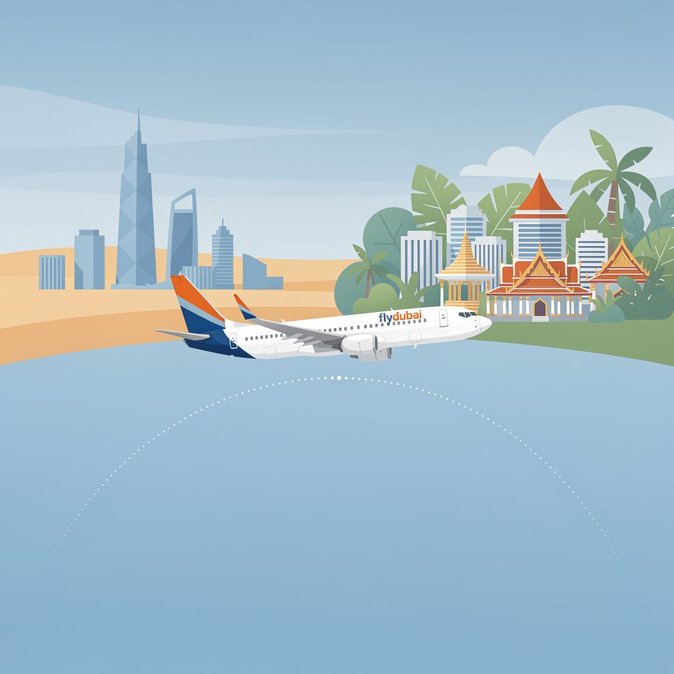
Dubai’s low-cost carrier flydubai quietly redrew the Gulf–Asia map on 1 July by launching a daily Boeing 737 MAX service from Dubai International (DXB) to Bangkok’s Don Mueang International Airport (DMK). The move, detailed in an aviation-industry blog on 4 July, is strategically significant: DMK is the world’s largest low-cost hub and gives UAE-based travellers budget access to Thailand’s capital without transiting the main Suvarnabhumi airport. Route basics: Flight time is just over six hours; schedules are timed for seamless two-hour connections onto Emirates’ long-haul bank at DXB under the carriers’ extensive codeshare. Bangkok becomes flydubai’s second Thai destination after Krabi and its 12th point in Southeast Asia. Why DMK? Operating costs—airport fees and turn-around times—are lower, allowing competitive fares for leisure travellers and SMEs. DMK is also closer to Bangkok’s northern industrial estates, appealing to business guests sourcing from Thai electronics and auto suppliers. Business-mobility impact: • Lower-fare inventory during the July-September peak when Bangkok hotel rates remain low. • Wider reach for Dubai-based MICE planners bundling “Dubai + Thailand” incentive trips. • Additional belly-cargo capacity on 737 MAX aircraft useful for e-commerce shippers moving small parcels between the Gulf and ASEAN. Industry trend: The service underscores a regional shift toward using new-generation narrow-bodies on medium-haul Gulf–Asia sectors—a model already embraced by Air Arabia and Jazeera Airways. Expect further secondary-airport launches as carriers chase cost efficiencies and niche traffic flows.
Source: MiGFlug Aviation World blog