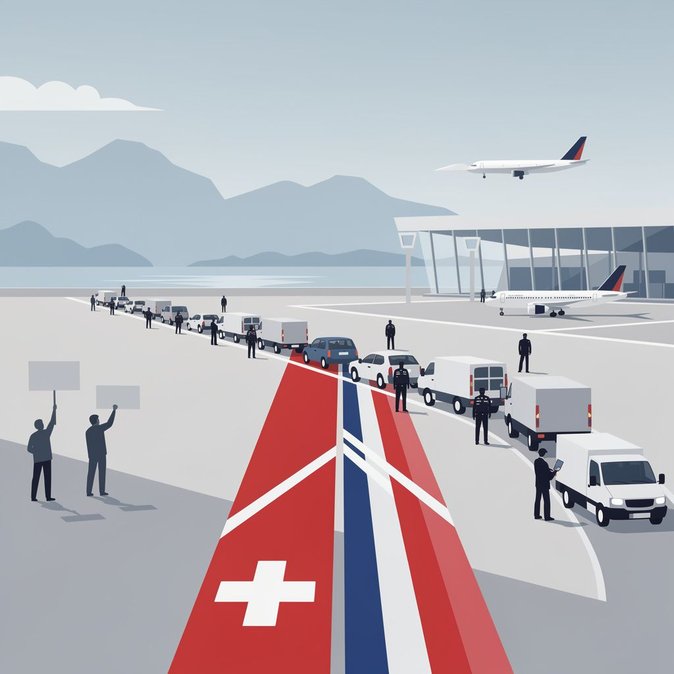
The Foreign, Commonwealth & Development Office (FCDO) quietly updated its Switzerland travel advice on 5 July 2026 to flag an extraordinary set of temporary border restrictions that will bite just as the summer holiday season begins. The alert stems from the 15-17 July G7 leaders’ meeting in Évian, France, with many delegates expected to transit through Geneva. Swiss authorities will close several minor crossings with France and impose rolling checks at others between 12-19 July. Motorways around Geneva Airport will be placed under intermittent traffic-stop orders while summit motorcades move, and a large authorised protest has been granted for central Geneva on 14 July. For mobility managers the timing could hardly be worse. UK corporates typically route assignees and project teams through Geneva for Alpine client work or cross-border operations in France’s Haute-Savoie region. A single closed crossing forces detours of up to 50 km; multiplied across a fleet of hire cars or shuttle coaches, that equates to lost billable hours and unexpected per-diem costs. Travellers connecting onto easyJet’s high-frequency Geneva-Gatwick services may also miss flights if road delays spill into the airport perimeter. The G7 security plan offers no “green lane” for commercially sensitive cargo, meaning time-critical hand-carried components and clinical trial samples risk being stuck in traffic alongside tourists. Employers should brief staff to carry written evidence of urgent business purpose and consider same-day courier services that route via Zurich or Lyon instead. HR teams should also warn staff booked on French TGV Lyria or Léman Express trains that services could be curtailed at Annemasse or diverted via Lausanne. Accommodation in Geneva is already 90 % sold out, pushing late bookers into France – and therefore across the very border points likely to be shut. Remote work contingencies, including virtual client meetings, should be activated where physical presence is non-essential. The episode is a live demonstration of how political summits can ripple far beyond diplomatic circles. For UK businesses the practical takeaway is simple: journeys that normally take an hour could take three, and even digital nomads need a Plan B when an entire metro area becomes a security zone.