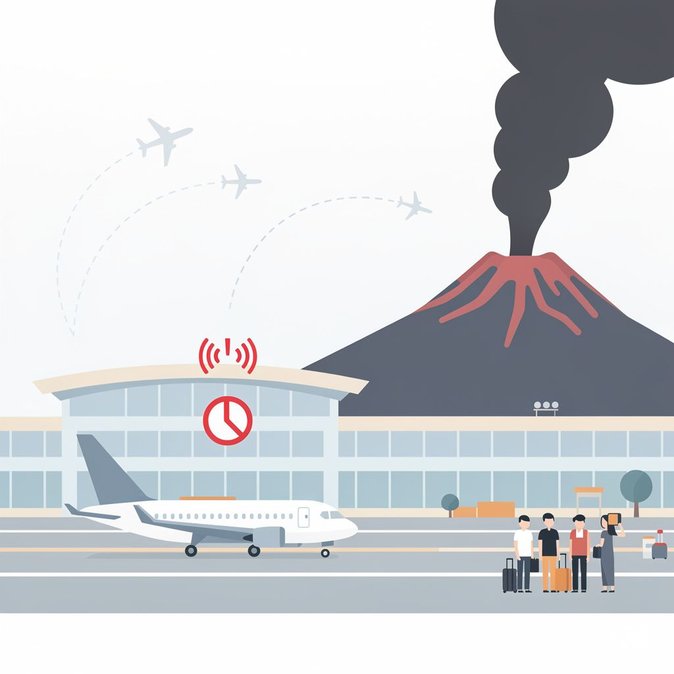
Catania-Fontanarossa airport found itself at the epicentre of a ‘perfect storm’ on 5 July, struggling with both the national aviation strike and a fresh eruptive phase of Mount Etna. At 16:00 local time the airport operator SAC suspended all arrivals after the INGV volcano observatory raised the aviation alert to red, citing a 1.5-km ash plume drifting directly over the runway heading. Only departures of aircraft already on the ground were permitted. The timing could not have been worse: ground-handling staff were simultaneously observing a four-hour Cub Trasporti strike, leaving skeleton teams to manage passenger assistance and rebookings. Over a dozen flights to Rome, Milan, Barcelona and Copenhagen were cancelled, and several Ryanair and Norwegian services were diverted to Palermo or Trapani. SAC’s crisis unit met at 15:30 and warned that evening arrivals could also be at risk if wind direction failed to change. Travellers were urged to follow airline SMS updates before proceeding to the airport. Hotel capacity in Catania was already tight due to summer festivals, forcing airlines to bus passengers to Siracusa and Taormina. For corporates the incident illustrates the compound nature of travel risk in southern Italy, where industrial action can coincide with volcanic activity. Mobility teams should keep a watch list of alternative airports (Comiso, Palermo, Malta) and pre-authorise car-service vendors to move employees quickly when Catania shuts.
Source: La Sicilia