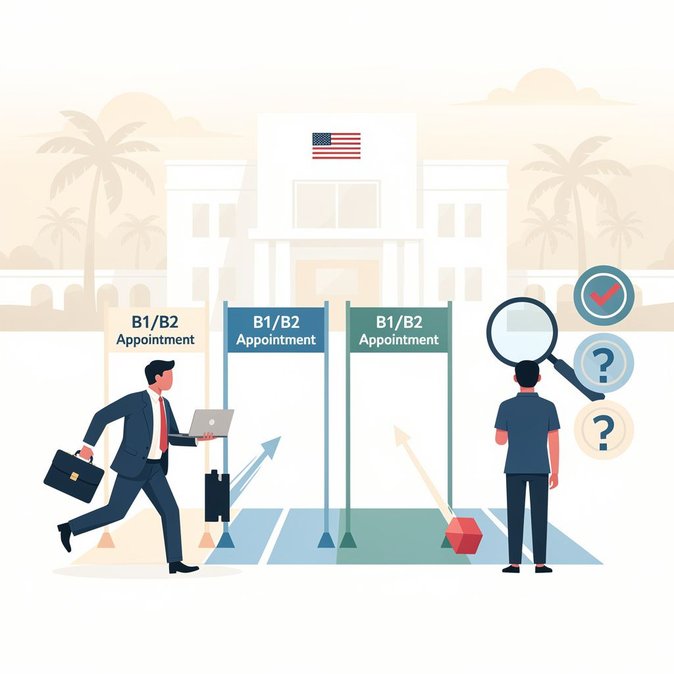
Indian applicants logging into the U.S. visa-scheduling portal this weekend noticed a surprise: the Kolkata consulate now offers four distinct appointment categories for the standard B1/B2 visitor visa. In addition to the traditional ‘General Tourism & Travel’ slot, new queues target business professionals, parents visiting U.S.-based children, and applicants with a recent refusal (within 24 months). Lawyers interpret the move as a micro-pilot designed to streamline high-volume posts and test continuous-vetting concepts outlined in recent DHS strategy papers. The segmentation could improve access for business travelers who often find themselves crowded out by leisure demand—a chronic issue in India’s post-pandemic surge. For multinational corporations, the dedicated ‘Business Professionals’ lane may shorten lead times for last-minute client visits and trade-show attendance, though official capacity numbers remain undisclosed. However, advocates caution against over-interpreting the change. Appointment categorization does not alter legal standards for issuance; all applicants must still overcome the strong-tie presumption under INA 214(b). The ‘Recent Refusal’ lane could, in fact, heighten perceived risk for repeat applicants, prompting officers to scrutinize ties even more closely. Action items: mobility teams should guide Indian travelers to select the most accurate purpose category and remind them that misalignment (e.g., choosing tourism for a sales trip) can trigger Section 221(g) administrative processing. Companies should also track whether other Indian posts adopt the pilot, as early adoption could shift regional appointment-shopping strategies.
Source: The American Bazaar
How VisaHQ can help
VisaHQ simplifies the visa application process for individuals and businesses. Check current travel requirements, prepare the required documents and manage your application online through the VisaHQ United States of America portal.More From United States of America
View all
New analysis explains how Supreme Court’s birthright-citizenship ruling stabilises immigration planning for employers

Congress Sends $70 Billion Secure America Act to President, Locking-In DHS Enforcement Funding Through 2029