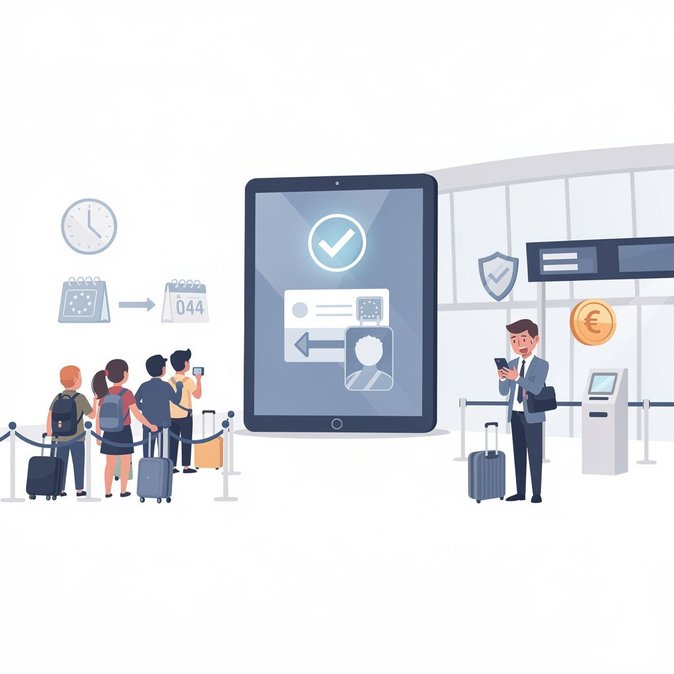
The European Union has postponed the start of its Electronic Travel Information and Authorisation System (ETIAS) to 2027, according to a 7 July 2026 report in the Berliner Zeitung citing EU and airline sources. ETIAS—originally due in Q4 2026—will require visa-exempt travellers to pay €20 and obtain online clearance before visiting any of 30 European countries, including Austria.
For travellers trying to stay ahead of these shifting timelines, visa service provider VisaHQ can simplify the process: its Austria portal already tracks ETIAS updates and lets users set alerts, pre-fill traveller profiles and manage any additional visa or passport services their trip may require, so companies and holidaymakers alike can keep paperwork headaches to a minimum.
Officials attribute the slip to persistent queuing problems with the related Entry/Exit System, which must be fully stable before ETIAS can piggy-back on its databases. Aviation bodies ACI Europe and IATA had warned of border waits “of up to five hours,” urging Brussels to give governments the power to suspend EES during peak periods. The Commission has instead opted to delay ETIAS, giving airports time to fine-tune infrastructure and enrol frequent travellers. For Austrian tourism marketers, the deferral is a mixed blessing: it removes a potential deterrent for long-haul visitors during the 2027 Ski World Championships in St. Anton but also prolongs uncertainty for tour operators that had already budgeted for the new fee. The Interior Ministry said it will halt recruitment of 50 ETIAS adjudication staff until a revised timetable is issued. Corporate mobility teams should update employee-travel FAQs: no action is required for US, UK or Singaporean staff travelling on short notice in 2026, but budgets for 2027 should still include the €20 charge and possible processing delays once the system finally goes live.
For travellers trying to stay ahead of these shifting timelines, visa service provider VisaHQ can simplify the process: its Austria portal already tracks ETIAS updates and lets users set alerts, pre-fill traveller profiles and manage any additional visa or passport services their trip may require, so companies and holidaymakers alike can keep paperwork headaches to a minimum.
Officials attribute the slip to persistent queuing problems with the related Entry/Exit System, which must be fully stable before ETIAS can piggy-back on its databases. Aviation bodies ACI Europe and IATA had warned of border waits “of up to five hours,” urging Brussels to give governments the power to suspend EES during peak periods. The Commission has instead opted to delay ETIAS, giving airports time to fine-tune infrastructure and enrol frequent travellers. For Austrian tourism marketers, the deferral is a mixed blessing: it removes a potential deterrent for long-haul visitors during the 2027 Ski World Championships in St. Anton but also prolongs uncertainty for tour operators that had already budgeted for the new fee. The Interior Ministry said it will halt recruitment of 50 ETIAS adjudication staff until a revised timetable is issued. Corporate mobility teams should update employee-travel FAQs: no action is required for US, UK or Singaporean staff travelling on short notice in 2026, but budgets for 2027 should still include the €20 charge and possible processing delays once the system finally goes live.