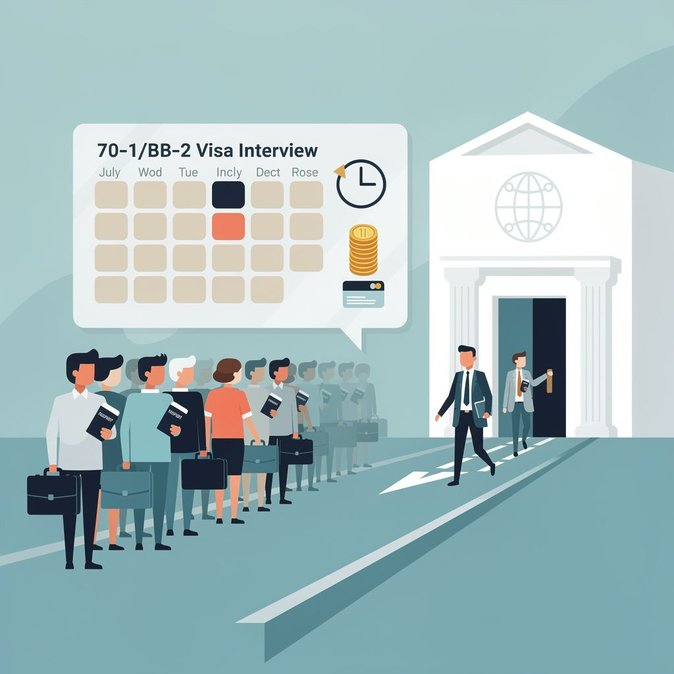
The U.S. Department of State has quietly begun a six-month pilot that lets B-1/B-2 visa applicants pay a $750 premium fee to snag an interview within 10 business days at select consulates, according to a temporary final rule published July 1 and industry alerts issued July 6 by immigration law firm Foster LLP. The new service—stacked atop the standard $185 Machine-Readable-Visa fee—aims to chip away at pandemic-era interview backlogs that still exceed 250 days in some posts.
![State Department Launches $750 ‘Premium’ Interview Slot for B-1/B-2 Applicants]()
For travelers who want an extra assist squeezing into those high-demand premium slots, VisaHQ offers end-to-end support that ranges from real-time appointment monitoring to document pre-check and secure fee payment. Its intuitive dashboard lets corporate mobility teams and individual applicants track U.S. consular availability at a glance, ensuring they don’t miss the narrow windows that open when a post self-certifies capacity for this pilot program.
Only business/tourist applicants qualify; petition-based NIVs such as H-1B and L-1 are excluded, and the premium fee buys speed in scheduling, not in processing or issuance. From a global-mobility standpoint, the option may be a game-changer for executives who need to attend short-notice board meetings or site visits in the United States. But supply will be limited: posts must self-certify spare capacity before offering premium slots, and the rule expires December 31 unless renewed. Companies should update travel policies to clarify whether the $750 fee is reimbursable and budget for surge demand once participating posts are listed on travel.state.gov. They should also caution travelers that security checks and administrative processing can still stretch final issuance beyond the 10-day window. The pilot echoes USCIS’s premium-processing model and may foreshadow a menu of fee-based consular services if Congress gives State authority to keep and spend the revenue. Stakeholders have until early August to file public comments on the program.

For travelers who want an extra assist squeezing into those high-demand premium slots, VisaHQ offers end-to-end support that ranges from real-time appointment monitoring to document pre-check and secure fee payment. Its intuitive dashboard lets corporate mobility teams and individual applicants track U.S. consular availability at a glance, ensuring they don’t miss the narrow windows that open when a post self-certifies capacity for this pilot program.
Only business/tourist applicants qualify; petition-based NIVs such as H-1B and L-1 are excluded, and the premium fee buys speed in scheduling, not in processing or issuance. From a global-mobility standpoint, the option may be a game-changer for executives who need to attend short-notice board meetings or site visits in the United States. But supply will be limited: posts must self-certify spare capacity before offering premium slots, and the rule expires December 31 unless renewed. Companies should update travel policies to clarify whether the $750 fee is reimbursable and budget for surge demand once participating posts are listed on travel.state.gov. They should also caution travelers that security checks and administrative processing can still stretch final issuance beyond the 10-day window. The pilot echoes USCIS’s premium-processing model and may foreshadow a menu of fee-based consular services if Congress gives State authority to keep and spend the revenue. Stakeholders have until early August to file public comments on the program.