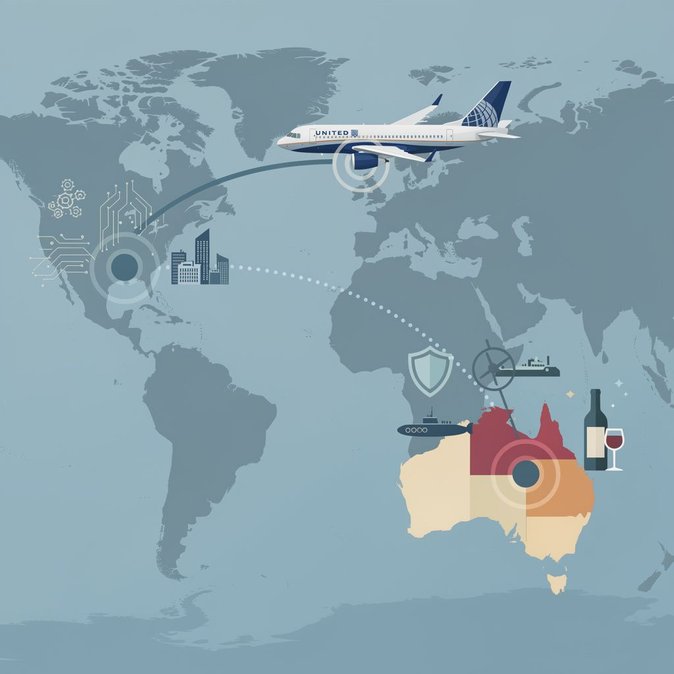
At 9:30 a.m. local time on 9 July, United Airlines flight UA 97 rolled onto the apron at Adelaide Airport, marking the first direct passenger service linking mainland United States and South Australia. The thrice-weekly Boeing 787-9 flight cuts up to five hours off traditional one-stop routings via Sydney or Melbourne, offering U.S. corporates a same-calendar-day connection to South Australia’s fast-growing defence-tech and renewable-energy sectors. For global-mobility programs this is more than a ribbon-cutting: Adelaide hosts critical AUKUS submarine-construction facilities and a clutch of semiconductor and space-launch start-ups that depend on short-notice travel from Silicon Valley and Washington, DC. HR teams can now draft assignment packages with a single, carrier-protected routing instead of multi-ticket itineraries that complicate tax tracking and emergency evacuation planning. United has timed its westbound departure from San Francisco at 10:15 p.m. to allow same-day connections from 26 U.S. business centers, including Newark and Chicago. Cargo capacity—45 tonnes per flight—also boosts project logistics: high-value prototypes and life-science cold-chain shipments can move between the Bay Area and Adelaide without trans-shipment delays that previously triggered Australian import-duty liabilities. United says early bookings show a 60-40 leisure-business split, with corporate demand led by defence prime contractors and viticulture exporters. Travel-policy implications: because the service is outside the U.S. “Fly America” carve-out for Open Skies partners, federally funded researchers traveling to Adelaide must obtain a cost-justification waiver or route through Sydney on a U.S. carrier under current GSA guidelines. Employers should update booking tools to reflect the new IATA code pairing (SFO-ADL) and remind travelers that Electronic Travel Authority (ETA) visas remain mandatory for U.S. citizens entering Australia. United becomes the only airline offering non-stops to four Australian cities, cementing Star Alliance’s network advantage just months before Los Angeles hosts the 2026 APEC CEO Summit, where delegate demand for trans-Pacific premium seats is expected to spike.