Eurostar passengers travelling between Brussels, London and Paris were greeted on Saturday morning (11 July 2026) by a blanket advisory that services on several key routes have been cancelled from 10 to 14 July. The operator’s live travel-updates page lists multiple trains “cancelled on the Eurostar network between 10/07/2026 and 14/07/2026” due to unspecified “operational restrictions.”
Travellers who suddenly need to adjust their itineraries—or secure the proper travel documentation for alternative routes—can streamline the process through VisaHQ; the platform’s Belgium portal offers fast visa and ETA assistance, real-time status tracking, and expert support, ensuring that last-minute changes caused by rail disruptions don’t derail compliance with entry requirements.
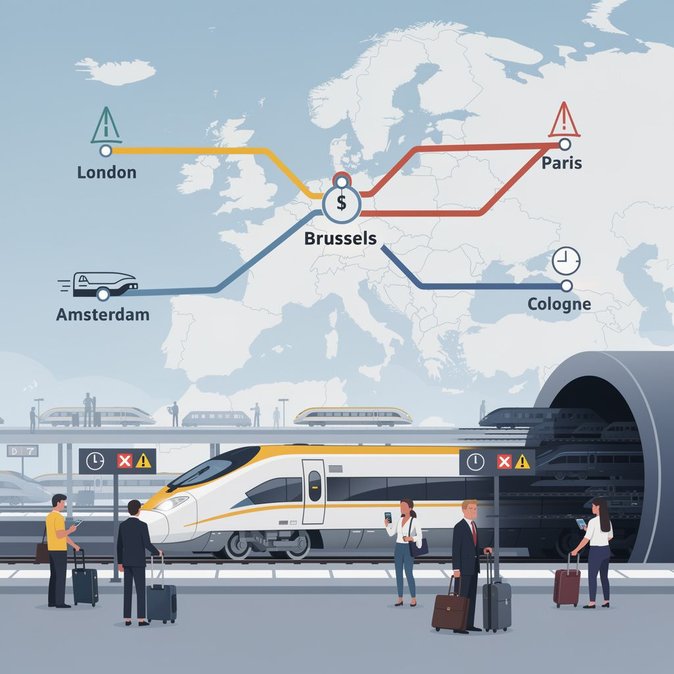
While Eurostar has not detailed the nature of the restrictions, industry sources point to ongoing engineering works in northern France and staffing shortfalls affecting both SNCF Réseau and Infrabel signalling teams. The notice stresses that affected ticket-holders can change dates free of charge or apply for a full refund, but business-traveller groups warn that short-notice cancellations are complicating cross-Channel itineraries at the height of the summer conference season. For companies that rely on same-day rail shuttles between EU and UK headquarters, the suspension comes at a delicate moment: Britain’s new Electronic Travel Authorisation (ETA) pilot begins on 15 July and many firms had deliberately advanced meetings to avoid potential teething problems next week. Travel-management firms are advising corporate travellers to reroute via Brussels Airport—where seat availability is already tightening—or to consider Thalys-ICE combinations through Cologne, although both alternatives add two to three hours to end-to-end journey times. The Belgian Employers’ Federation (FEB) reiterated calls for Eurostar and network managers to introduce a thirty-day rolling disruption forecast so that relocation advisers and mobility teams can plan contingencies earlier. Looking ahead, Eurostar says it expects normal operations to resume on 15 July, but cautions that “further timetable adjustments” remain possible until mid-August as infrastructure upgrades continue. Mobility managers should therefore keep traveller-tracking tools up to date and remind employees to retain boarding confirmations for potential EU passenger-rights compensation claims.
Travellers who suddenly need to adjust their itineraries—or secure the proper travel documentation for alternative routes—can streamline the process through VisaHQ; the platform’s Belgium portal offers fast visa and ETA assistance, real-time status tracking, and expert support, ensuring that last-minute changes caused by rail disruptions don’t derail compliance with entry requirements.
While Eurostar has not detailed the nature of the restrictions, industry sources point to ongoing engineering works in northern France and staffing shortfalls affecting both SNCF Réseau and Infrabel signalling teams. The notice stresses that affected ticket-holders can change dates free of charge or apply for a full refund, but business-traveller groups warn that short-notice cancellations are complicating cross-Channel itineraries at the height of the summer conference season. For companies that rely on same-day rail shuttles between EU and UK headquarters, the suspension comes at a delicate moment: Britain’s new Electronic Travel Authorisation (ETA) pilot begins on 15 July and many firms had deliberately advanced meetings to avoid potential teething problems next week. Travel-management firms are advising corporate travellers to reroute via Brussels Airport—where seat availability is already tightening—or to consider Thalys-ICE combinations through Cologne, although both alternatives add two to three hours to end-to-end journey times. The Belgian Employers’ Federation (FEB) reiterated calls for Eurostar and network managers to introduce a thirty-day rolling disruption forecast so that relocation advisers and mobility teams can plan contingencies earlier. Looking ahead, Eurostar says it expects normal operations to resume on 15 July, but cautions that “further timetable adjustments” remain possible until mid-August as infrastructure upgrades continue. Mobility managers should therefore keep traveller-tracking tools up to date and remind employees to retain boarding confirmations for potential EU passenger-rights compensation claims.