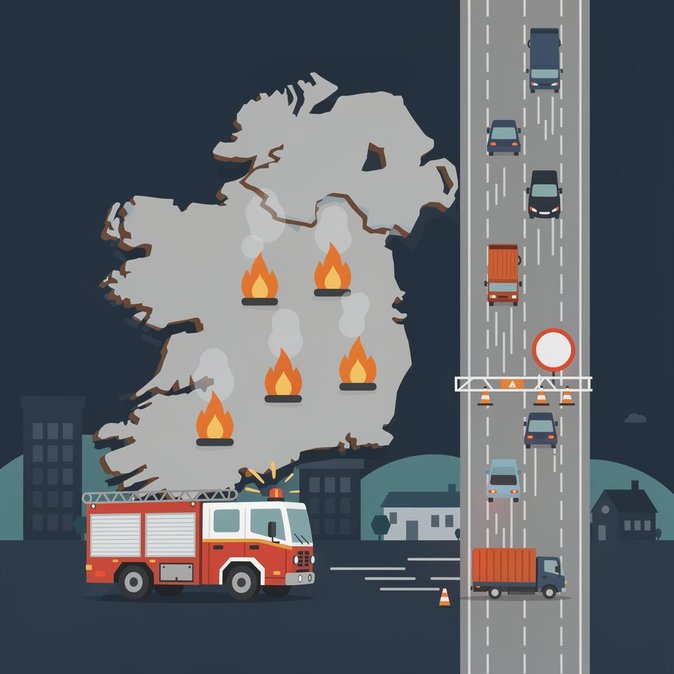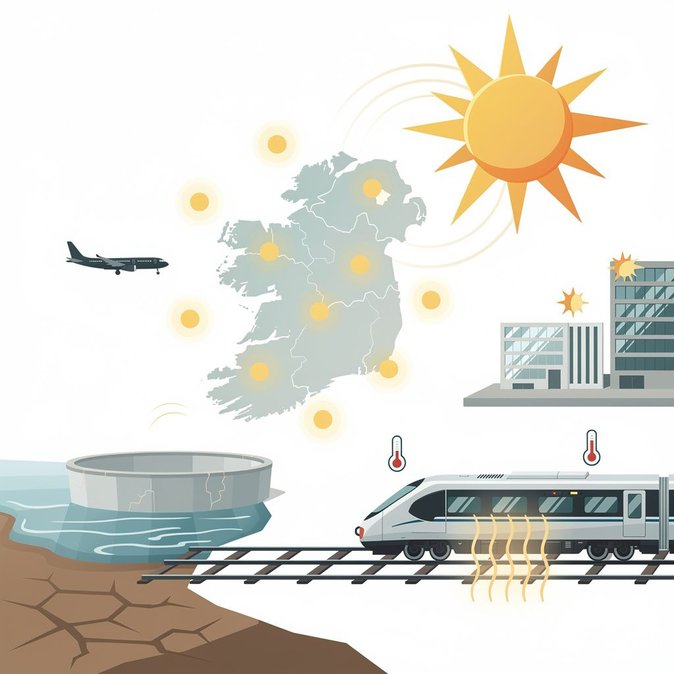
Ireland’s national meteorological service, Met Éireann, has extended Status Yellow high-temperature warnings to ten additional counties after thermometers hovered above 27 °C for a seventh straight day. The latest alerts, published on Sunday 12 July, cover Clare, Cork, Kerry, Galway, Mayo, Kilkenny, Laois, Limerick, Offaly and Tipperary from 13:00 Sunday until 07:00 Wednesday. A separate warning affecting Carlow, Kildare, Longford, Meath, Waterford, Westmeath and Wexford expired overnight but may be re-activated if forecasts remain unchanged. The protracted heatwave—already one of the longest on modern Irish record—is stretching critical infrastructure. Uisce Éireann reports reservoir draw-downs of up to 30 million litres per day and warns that localised supply restrictions cannot be ruled out. Rail operator Iarnród Éireann has imposed precautionary 20 km/h speed reductions on exposed sections of track during the hottest hours, adding up to ten minutes to inter-city journey times. Dublin Airport says runway surface temperatures are being monitored continuously; so far no weight restrictions have been required but airlines have been advised that short-notice payload limits are possible during peak afternoon heat. For global-mobility managers the key risk is employee health and schedule reliability. Companies with mobile staff—particularly construction, utilities and field-service engineers—should review heat-stress protocols and ensure adequate hydration breaks. Business travellers are being advised to check train and regional bus timetables regularly and allow extra contingency when connecting with flights or ferries. International assignees unfamiliar with Irish housing conditions should note that domestic air-conditioning is rare; employers may need to supply portable cooling units for temporary accommodation. Met Éireann says the current upper-air blocking pattern that is trapping hot continental air over Ireland is unlikely to shift before mid-week, with daytime highs of 28–29 °C forecast for Monday and Tuesday. If temperatures exceed 30 °C, the agency could upgrade to an Orange warning, triggering additional guidance from the Health Service Executive. A gradual breakdown, with scattered thunderstorms, is expected from Thursday. The wider business-travel ecosystem—from car-rental companies coping with higher breakdown rates to hotels facing peak electricity demand—is bracing for continued pressure. Firms organising conferences or incentive trips should verify venue cooling capacity and consider shifting outdoor activities to the morning or evening.
Source: Extra.ie