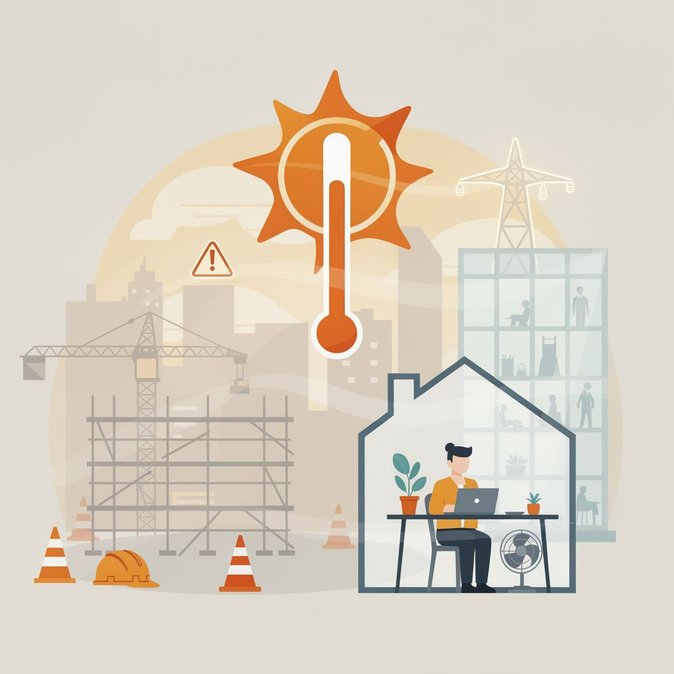
Local daily Politis provided additional detail on the heatwave’s operational fallout early on 22 July, confirming that the orange alert would trigger an outright prohibition on outdoor work until 5 p.m. and outlining extensive public-health advice from the Ministry of Health. The article collates practical information businesses can use to safeguard mobile staff. Temperature projections released overnight show highs of 43 °C inland, 36 °C on southern coastal areas and 32 °C in the Troodos mountains. The Health Ministry is urging employers to provide air-conditioned rest areas, monitor workers for early signs of heat exhaustion and postpone non-urgent meetings that require travel. The Electricity Authority has also cautioned that evening peak demand may strain the grid—a factor global mobility teams need to consider when scheduling virtual onboarding sessions or data-heavy remote work. With Cyprus already experiencing an 18 % rise in electricity tariffs this year, companies operating shared-service centres on the island are weighing short-term work-from-home (WFH) switches versus the cost of running backup generators. HR teams are reminded to check that any WFH arrangements remain compliant with the island’s personal-income-tax residency thresholds, which can be triggered by extended remote stays. Politis notes that temperatures should begin to fall on Friday, but meteorologists warn that another spike is possible next week. Organisations with time-sensitive projects—particularly in construction, hospitality fit-outs and field-sales roll-outs—should therefore build float days into their project plans and communicate expected slow-downs to regional headquarters.