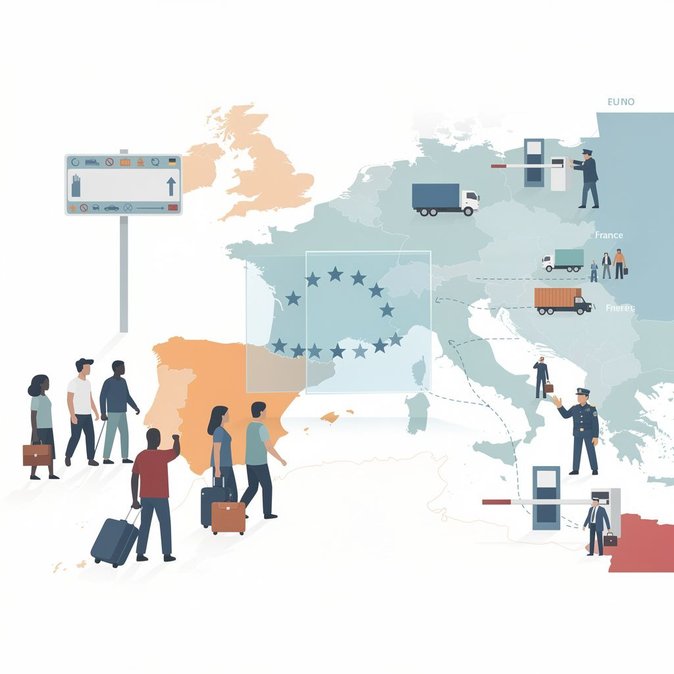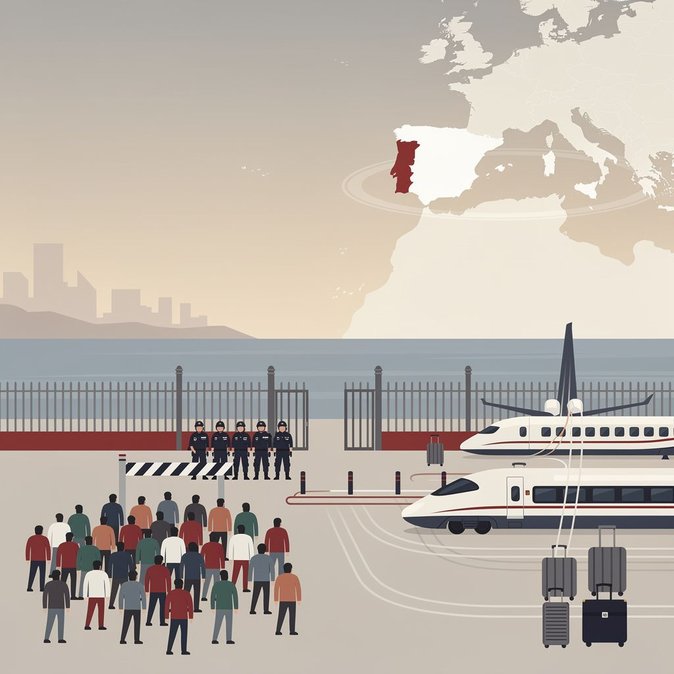
Four days after an unprecedented mass crossing in which up to 60,000 migrants entered Ceuta from Morocco, Spain’s government is still in emergency mode—while facing intense political heat at home and renewed pressure from EU partners. Government spokeswoman Elma Saiz insisted on Monday that intelligence services had issued no warning of the scale of the influx, pushing back against media reports that the CNI had filed multiple alerts. The crisis has already claimed at least 94 lives, according to local authorities, and has forced Ceuta to shelter more than 800 unaccompanied minors in hastily converted warehouses. A newly created inter-agency data centre will centralise victim identification and coordinate humanitarian response—mirroring protocols used after Spain’s 2019 DANA floods. Diplomatically, Foreign Minister José Manuel Albares announced he will demand “solidarity measures” at Tuesday’s extraordinary EU home-affairs meeting, after Italy temporarily re-imposed document checks on travellers from Spain and hinted it could suspend Schengen for non-EU arrivals. European Commission President Ursula von der Leyen praised Spanish-Moroccan cooperation but urged stricter control of “critical” external borders. Domestically, opposition parties accuse Prime Minister Pedro Sánchez of mishandling the situation. The conservative PP questions why military units were not pre-deployed, while Ceuta’s regional government has requested a national-emergency declaration and army reinforcement of the double fence. The episode has reignited debate over Spain’s January 2026 regularisation scheme for undocumented workers, with critics claiming it acts as a pull factor. For global-mobility teams the implications are immediate: travellers to or transiting through Ceuta face unpredictable border closures; increased passport checks are slowing ferry and air links across the Strait of Gibraltar; and Italy’s unilateral Schengen measures could trigger copy-cats elsewhere, complicating intra-EU trips for non-EU assignees. Companies with North Africa–Spain supply chains should prepare for customs delays and consider alternative routings via Almería or Valencia. Longer term, the event is likely to accelerate EU discussions on a common crisis-response mechanism—potentially leading to ad-hoc suspension clauses that corporate travellers will need to track closely.
Source: El País