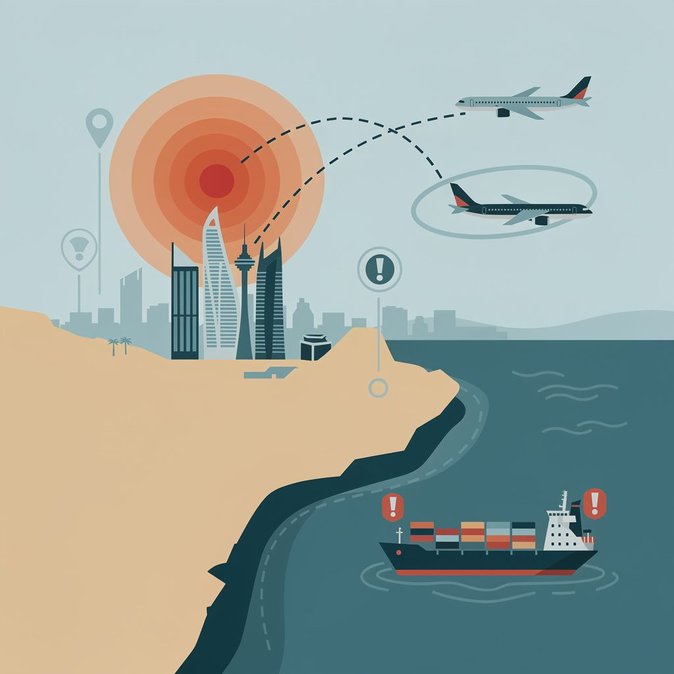
The geopolitical standoff between the United States and Iran intensified this week, and its effects are being felt in passenger terminals and on shipping lanes across the Gulf. On the evening of 19 September 2026, Saudi Arabia’s Civil Defence lifted a rare city-wide alert for Riyadh after explosions and an Aramco fuel-tank fire near King Khalid International Airport. While normal operations soon resumed, the incident underscored how quickly conflict flashpoints can hit regional mobility. In the UAE, airport websites and airline notices pointed to knock-on cancellations and delays mirroring the broader pattern seen throughout the day. flydubai axed Bahrain, Abha and Yanbu rotations, Etihad retimed South-Asia departures, and Air Arabia trimmed Kuwait and Bahrain flights. Shipping risk also rose after Iran claimed to have hit a tanker in the Strait of Hormuz; marine-war insurers have raised premium surcharges for transits through the chokepoint. Travel advisories remain fluid. The UK has downgraded its warning from "avoid all but essential travel" but still urges vigilance; the US retains a Level 3 "Reconsider Travel" advisory. Australia and Canada continue to caution about possible airspace closures. Corporate security teams are therefore advising UAE-based expatriates to maintain 72-hour contingency kits and keep all travel documents up to date. Business implications go beyond delayed flights. Multinationals routing high-value cargo via Jebel Ali or Khalifa Port are re-examining insurance cover, while marine-crew change agencies in Fujairah report last-minute itinerary switches to Muscat and Dammam to avoid potential detention in Iranian waters. For UAE employers, the practical takeaway is to stay abreast of embassy alerts, maintain traveller tracking systems and brief employees on emergency procedures. Until diplomatic pressure eases tensions, mobility planners should expect short-notice changes to both flight timetables and sea-freight schedules.
Source: Gulf News