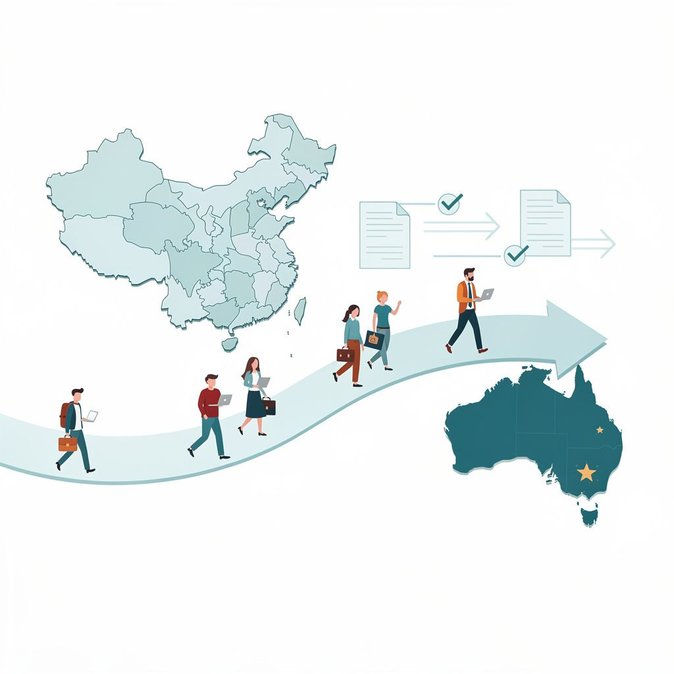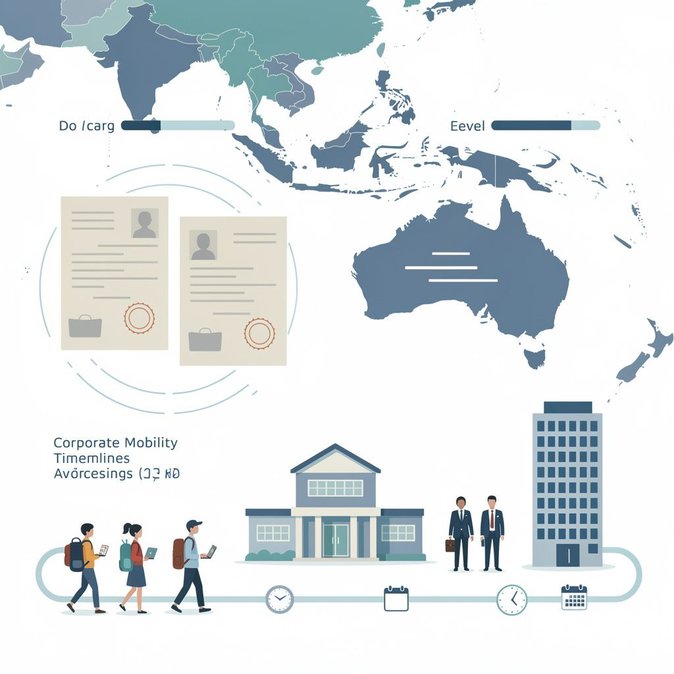
The Department of Home Affairs has quietly pushed a major button on 30 September 2026: the twice-yearly reset of “Evidence Levels” used under Australia’s Simplified Student Visa Framework (SSVF). Drawing on a full financial year of visa-outcome data (1 July 2025-30 June 2026) the update simultaneously rewrites the risk ratings for every passport country and for more than 1,300 CRICOS-registered education providers. From today, the Evidence Level attached to a country or provider automatically updates the document checklist in ImmiAccount; applicants lodging after 00:01 AEST must follow the new settings. The system, introduced in 2016, groups countries and providers into Level 1 (lowest immigration risk) to Level 3 (highest). An applicant whose country–provider pairing sits at the streamlined end of the matrix can usually meet financial capacity with a simple declaration and omit English-test evidence at lodgement. Higher-risk pairings must attach bank statements and English scores up-front. Fraud-related refusals, visa cancellations and subsequent protection-visa applications carry the heaviest weighting in the algorithm, so any spike in one metric can tip a provider or country into a higher level at the next review. Sector insiders had lobbied for a moratorium while the government consults on broader migration reforms announced on 17 September, but Home Affairs opted to press ahead. International Education Association of Australia chief executive Phil Honeywood told The Koala that “some flexibility in tolerance factors” appears to have been applied, yet several small private colleges are already reporting a shift to Level 3. Because Home Affairs does not publish the final lists, agents are reverse-engineering the data by running test cases through the public Document Checklist Tool. For institutions courting overseas enrolments ahead of the 2027 academic year the practical stakes are high. A university that slides from Level 1 to Level 2, for example, suddenly loses streamlined processing for all but Level 1 passport holders. Agents now face the delicate task of re-auditing pipelines—explaining to prospective students why a promised “no-bank-statements” pathway may have vanished overnight. Providers that improved their compliance score, on the other hand, gain a competitive edge: less red tape for applicants and faster processing times in a visa-queue environment already under scrutiny for blow-outs. Corporate mobility teams should also pay attention. Dependent family members of corporate transferees often enrol in Australian schools and colleges; evidence-level shifts can change the paperwork required for those student-visa applications and, by extension, the timing of full assignment mobilisation. HR managers are advised to rerun Document Checklist Tool scenarios before lodging any subclass 500 applications from today onward.
Source: The Koala News