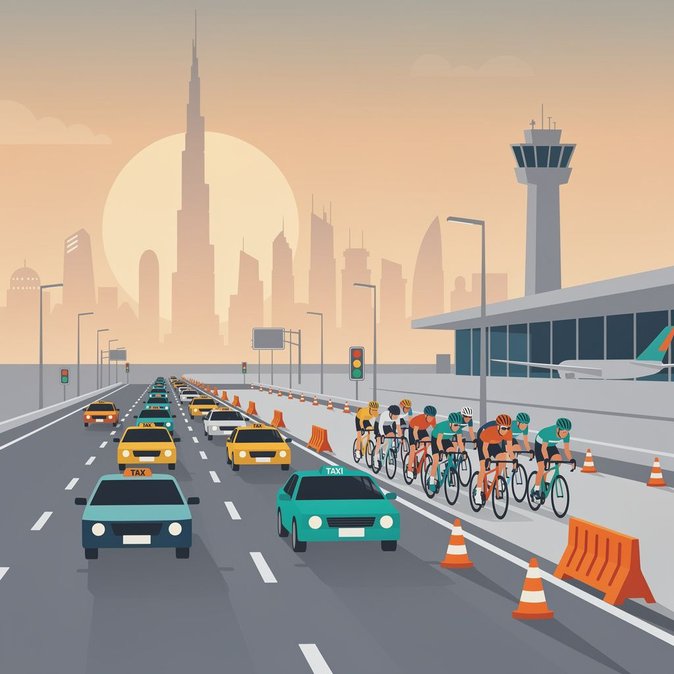
Business travellers landing in Dubai on Sunday discovered that the final leg of their airport-to-hotel journey required extra time and patience. The emirate’s Roads and Transport Authority (RTA) closed sections of Al Ain Road, Sheikh Zayed bin Hamdan Street, Ras Al Khor Road and Al Meydan Road between 06:00 and 08:30 on 4 October 2026 to facilitate the ‘Proud of UAE’ community cycling event. While the rolling closures lasted only 10–30 minutes per stretch, the impact rippled across ride-hailing platforms and private-hire car services, particularly for early arrivals on long-haul flights from Europe and Asia. Hotels in Business Bay and Downtown Dubai reported check-in queues as airport transfers hit bottlenecks near Nad Al Sheba. Frequent flyers connecting to Abu Dhabi by road also faced detours, adding up to 45 minutes to the usual 90-minute trip. The RTA sign-posted alternative routes via Emirates Road and posted live-traffic updates on X (formerly Twitter), but many first-time visitors remained unaware until drivers relayed the news kerb-side. Travel-management companies (TMCs) say the episode underscores the importance of integrating local event calendars into pre-trip advisories—particularly in cities like Dubai that host a dense roster of sporting and MICE events. For corporates the lessons are straightforward: build buffer time into airport transfers, communicate real-time traffic alerts through preferred messaging apps and consider pre-booking flexible check-in at hotels when key arteries are subject to closure. Event organisers, meanwhile, continue to coordinate closely with the RTA to stagger start times and keep disruption to a minimum—a blueprint that will be critical as Dubai gears up for the Ai Everything Summit later in the week, which is expected to attract more than 20,000 delegates. Although domestic rather than cross-border, such disruptions can still affect regional mobility chains by delaying onward flights, chauffeur-driven connections to Saudi giga-projects and meeting schedules for visiting executives. Awareness—and a dash of patience—remains the traveller’s best asset.
Source: The National