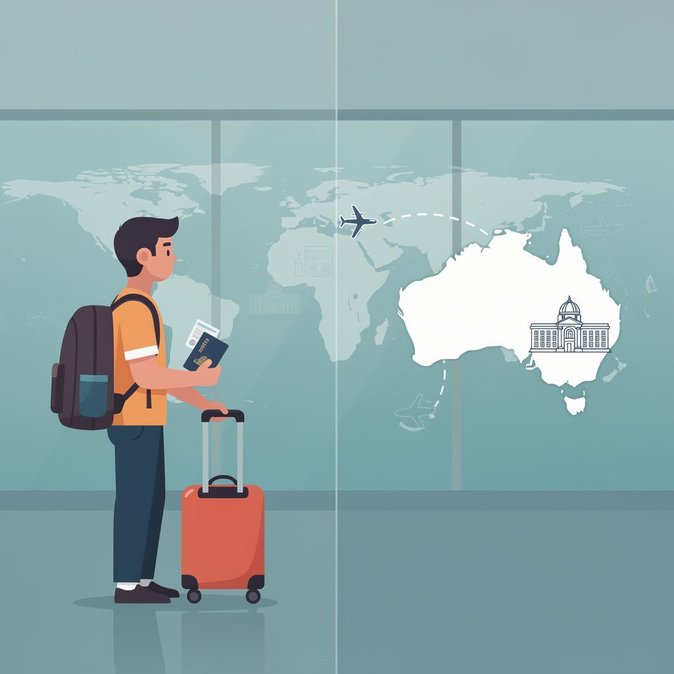
Indian media outlet Hindustan Times published a detailed explainer on 3 October (evening AEST) outlining how Australia’s 2 October student-visa reforms affect Indian nationals. The article confirms that most new Student-visa applicants must now apply from outside Australia and can no longer include partners or children, unless exempt as PhD, Defence/DFAT scholars or Pacific/ASEAN awardees. India remains Australia’s second-largest source of overseas students—over 130 000 enrolments in 2025—making the changes highly significant for education exporters and employers recruiting from Indian universities. Agents in Delhi and Mumbai report a surge in enquiries about bridging Visitor visas and online study options while offshore applications are processed, but warn students to check refund policies before paying tuition deposits. For Australian businesses, the new rules may reduce on-shore switching from Student to Temporary Graduate or employer-sponsored streams, potentially tightening the talent pipeline for ICT and engineering roles traditionally filled by Indian graduates. HR teams should plan earlier sponsorship or utilise the Temporary Skill Shortage (TSS) visa for high-potential candidates. Bilateral diplomacy also looms large. In January 2026 Australia placed India in the ‘highest-risk’ category under its Simplified Student Visa Framework, raising evidentiary thresholds; the latest measures build on that stance. Institutions recruiting in India must therefore reinforce financial-capacity checks and genuine-student assessments to minimise refusal rates. Looking forward, industry bodies such as Universities Australia are lobbying for a streamlined pathway for high-achieving STEM graduates. Whether Canberra carves out targeted concessions could depend on how the first half-year of offshore processing data shapes NOM figures.
Source: Hindustan Times