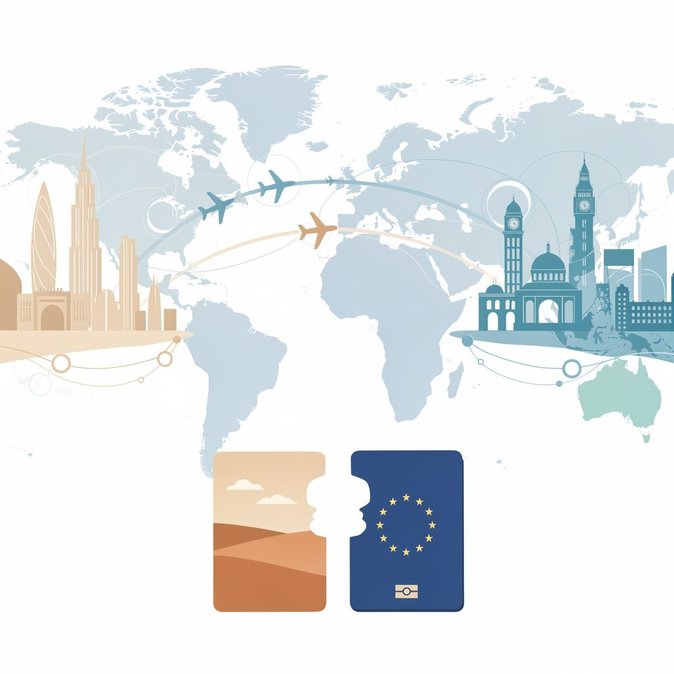
Delegations from Gulf Cooperation Council legislatures—including the UAE Federal National Council—met European Parliament counterparts in Brussels on 16 October 2026 and issued a joint statement calling for “swift progress” toward reciprocal visa-free travel between the EU and the five GCC states that still require Schengen visas. Although the UAE has enjoyed 90-day visa-free access to the Schengen zone since 2015, the other GCC members—Saudi Arabia, Kuwait, Qatar, Bahrain and Oman—do not. The joint communiqué suggests a bloc-wide approach that could, in theory, bolster intra-GCC labour mobility by allowing non-UAE nationals hired by Emirati multinationals easier access to European project sites. For the UAE, the move has strategic significance: it positions the country as a champion of regional mobility while safeguarding its own existing privileges. UAE negotiators reportedly highlighted the success of their biometric passport programme, arguing it could serve as a template for the rest of the GCC to meet EU security benchmarks. Legal experts caution that any reciprocal regime would still require ratification by each EU member state and could take years. Nonetheless, corporate visa teams should track developments closely, as pan-GCC visa-free status would simplify secondments from Dubai or Abu Dhabi headquarters to European offices. The statement also referenced joint initiatives on digital border management and traveller data exchange, hinting at future interoperability between EU’s Entry/Exit System and GCC e-gates.
Source: Emirates News Agency (WAM)