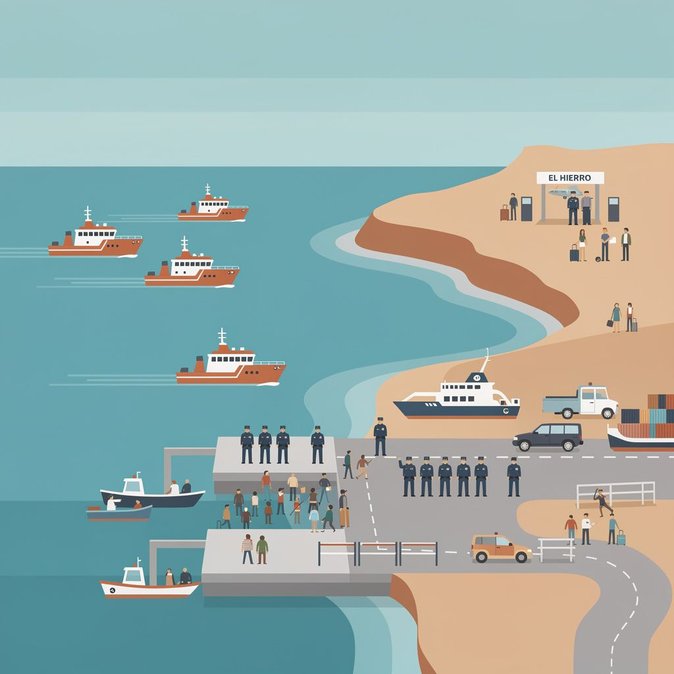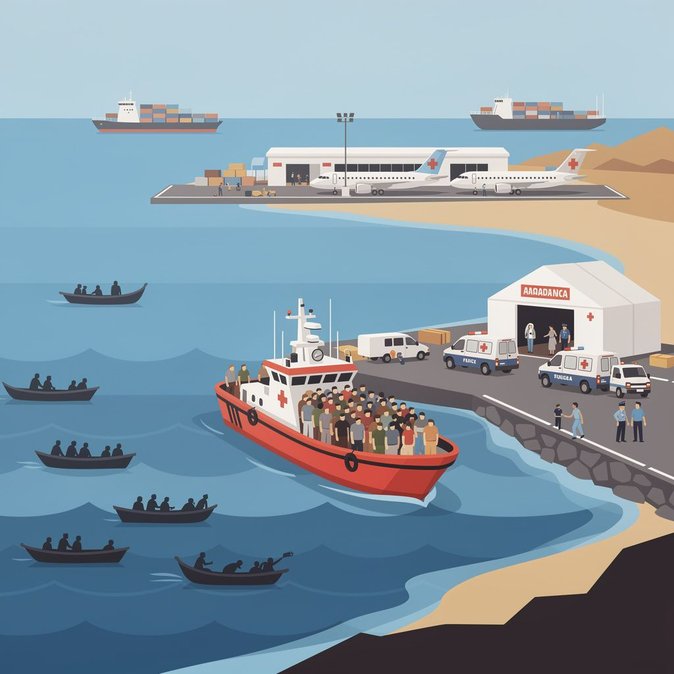
Spain’s maritime rescue service confirmed on Sunday that 2,192 people were assisted off 24 boats arriving between dawn on Friday 13 November and midnight Saturday 14 November. Most landings again concentrated on El Hierro, a volcanic island of barely 12,000 inhabitants now hosting arrivals equal to half its population this month alone. The weekend surge cements a sharp reversal of the 5.5 percent year-on-year decline reported up to 31 October. Aid groups say boat occupancy has doubled since summer, with several cayucos carrying more than 200 people each. The International Organization for Migration classifies the Atlantic passage as the world’s deadliest; NGO Caminando Fronteras has logged 379 presumed drownings so far this year. Hoteliers, cruise-ship agents and exporters expressed alarm that overstretched security and medical staff are being diverted from Tenerife and Gran Canaria airports to cover port landings, lengthening passport-control queues for holiday-makers and delaying perishable cargo. Iberia and Binter Canarias warned of potential schedule disruptions if police reinforcements do not arrive this week. The Interior Ministry’s crisis cell has moved extra riot-control units (UIP) and identity-processing teams from mainland Spain, but officials privately concede that accommodation on the larger islands is now “at saturation point”. Industry body Exceltur urged the government to “ring-fence airport and tourist-corridor resources” to protect a sector that contributes 25 percent of Canary Islands GDP. With the country in election mode, parties on the right accused Prime Minister Pedro Sánchez of under-estimating the crisis, while left-wing MPs called for more legal migration pathways from West Africa to reduce dangerous sea crossings.
Source: Associated Press / Euronews