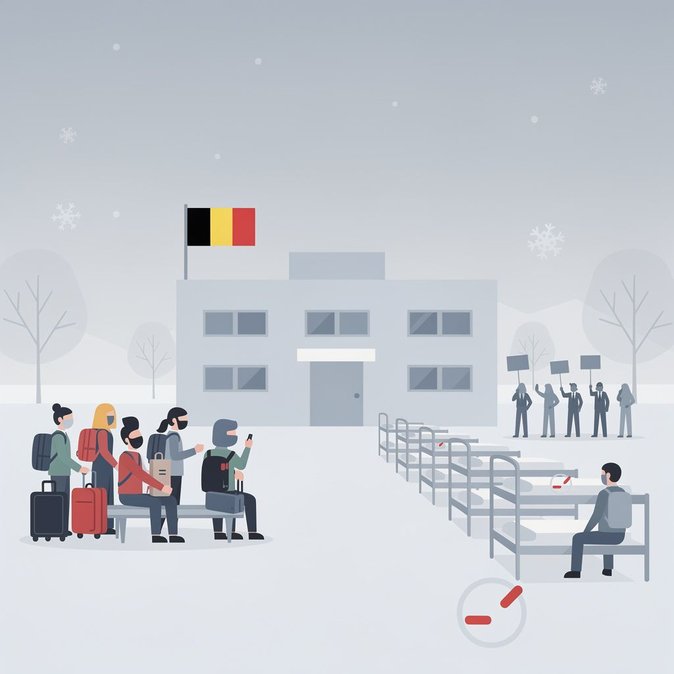
Belgium’s Office of the Commissioner General for Refugees and Stateless Persons (CGRS) released its monthly asylum dashboard on 16 November 2026. According to the report, the Immigration Office registered 2,156 people (including accompanying children) who applied for international protection in October. Afghanistan, Palestine and Eritrea remained the three main countries of origin, followed by Turkey, Burundi, Guinea, the Democratic Republic of Congo, Cameroon, Yemen and Syria. While the October intake is 3 % lower than in September, it is still above the pre-pandemic monthly average (≈1,800). The CGRS rendered 2,726 decisions covering 3,506 individuals, granting refugee or subsidiary-protection status in 27.8 % of cases. Despite the high decision output, the pending caseload continues to grow. At the end of October, 27,030 files were awaiting a decision—roughly four times the 6,500 cases the CGRS considers a “normal” workload—leaving a structural backlog of 20,530 files. Several structural factors explain the accumulation. First, the 2022 Russian invasion of Ukraine diverted staffing resources to temporary-protection registrations. Second, regional labour-shortages have slowed the hiring of additional case officers despite a higher asylum budget in 2026. Finally, the accelerated procedures introduced under the EU Pact on Migration and Asylum (in force since June) require more detailed interview recordings and translations, marginally extending processing time. For employers relocating non-EU talent to Belgium, the figures mean longer lead times for accompanying-family filings and an increased likelihood of staff being called to additional interviews when their nationality appears in the top-10 source countries. Companies are advised to budget for legal follow-up if protection is refused, as the protection rate has hovered below 30 % for three consecutive months. The CGRS expects to clear 2,400 files per month in 2027, which would still leave a sizeable inventory by year-end unless inflows fall sharply. Practical tip: HR teams should monitor the monthly statistics page and schedule renewal filings early—especially for employees whose humanitarian or subsidiary status expires in 2027—because the 20-day window to request an extension may coincide with periods of peak intake at the CGRS.