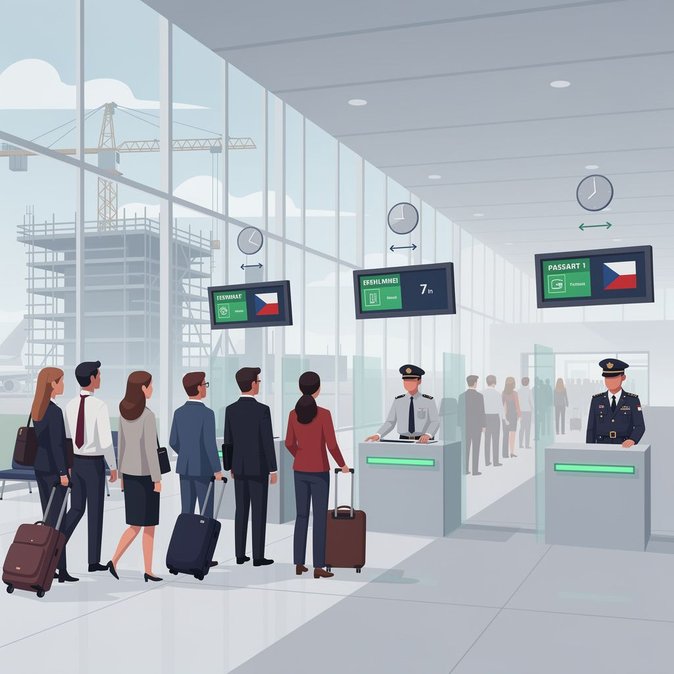
Real-time data from the independent monitoring platform EESQueue shows that passport-control waits for non-EU arrivals at Václav Havel Airport Prague averaged just seven minutes on Monday morning. The figure, updated hourly, contrasts sharply with the two-hour plus delays reported after the EU’s Entry/Exit System (EES) went live earlier this year. Airport management credits the improvement to a temporary redeployment of police officers and the phased opening of five new staffed booths and four EasyGoGate self-service lanes in Terminal 1. The CZK 290 million expansion, scheduled for completion in April 2027, is intended to future-proof Prague’s busiest terminal for the biometric EES and the forthcoming ETIAS permit. For now, 64 kiosks handle first-time biometric enrolment; returning travellers already in the database typically clear in a minute. Despite the positive trend, the monitoring site’s historical log reminds travellers that worst-case waits of 180 minutes are still possible when system outages coincide with peak arrival banks. Corporations routing short-haul business travellers through Prague are therefore urged to maintain generous connection buffers—especially around the 16:00 peak, when up to 35 flights land each day. Travel-management companies also note that airlines continue to deny boarding at origin points if a passenger’s biometric passport is damaged, because a failed chip triggers manual fallback procedures that overwhelm border staff. Czech authorities advise travellers to replace cracked passports immediately and to familiarise themselves with kiosk workflows to avoid hesitation at the scanner or fingerprint pad.
Source: EESQueue live monitor