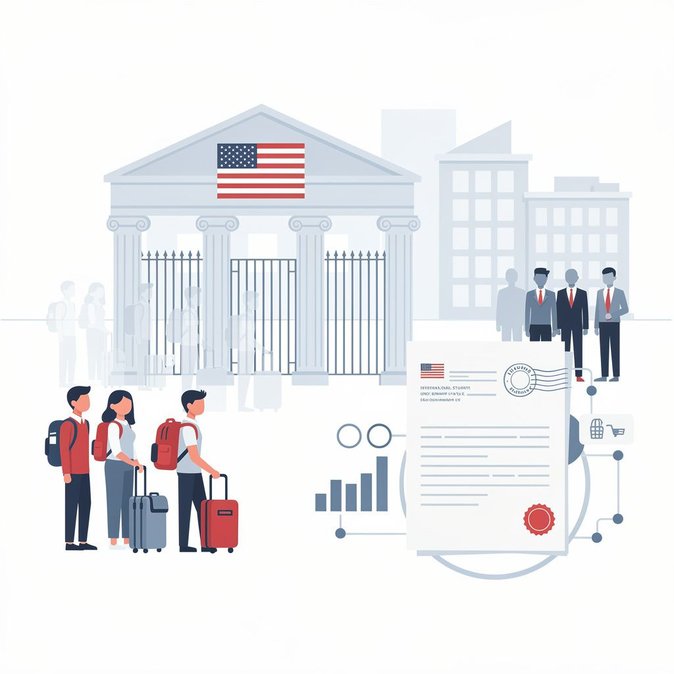
U.S. universities recorded a 9 percent year-on-year decline in international enrollment this fall, while first-time arrivals plunged 15 percent, according to a new Institute of International Education snapshot. Campus leaders blame a slower visa issuance process and new Department of Homeland Security rules—including a proposed $70,000 fee on each student who joins Optional Practical Training (OPT)—for dampening demand. The drop hits graduate programs hardest; STEM-heavy master’s cohorts, a traditional H-1B talent pipeline, report double-digit attrition. Corporations that rely on OPT to test foreign talent before sponsoring work visas could face narrower hiring pools as early as spring 2027. Policy context: the Trump administration has tightened duration-of-status rules, capped post-study stay at four years without DHS approval, and signaled aggressive enforcement against perceived visa “loopholes.” A federal judge has temporarily blocked parts of the four-year cap, but uncertainty alone is prompting students to choose Canada, the United Kingdom and Australia instead. Universities warn the decline threatens research output and regional economies; international students contributed an estimated $38 billion to the U.S. economy in 2025. Some institutions are lobbying Congress for a higher per-capita cap on student-worker visas or a carve-out from the proposed OPT fee. Practical take-away for mobility teams: expect fewer candidates with U.S. degrees entering the H-1B lottery, and budget longer lead times for change-of-status processing if DHS finalizes its fee rule.
Source: Associated Press