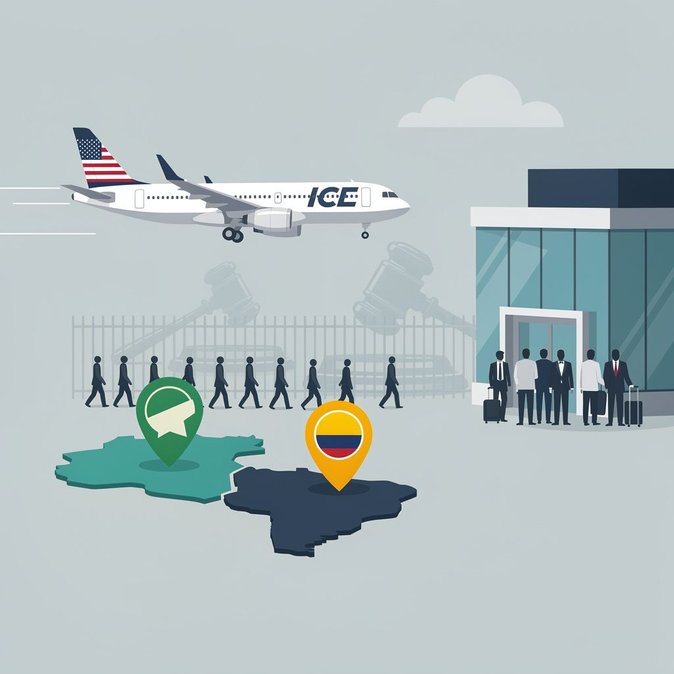
U.S. Immigration and Customs Enforcement (ICE) confirmed on 17 November that it chartered a removal flight three days earlier carrying 141 deportees—92 to Brazil and 49 to Colombia—including individuals convicted of homicide, sexual assault and large-scale narcotics trafficking. The Boeing 767 departed Alexandria, Louisiana, on 14 November, making drop-off stops in Belo Horizonte and Bogotá before returning to the United States. ICE said the operation forms part of its ‘no-safe-haven’ initiative targeting fugitives and violent recidivists who have exhausted all appeals. Brazilian authorities cooperated by issuing emergency travel documents and pre-clearing criminal-record transfers so that state police could take custody upon arrival. Under a 2019 bilateral agreement, Brazil must notify ICE within 30 days if any of the returnees re-offend. Large-scale enforcement flights had slowed during the pandemic but have risen sharply since mid-2025. According to flight tracker DeportationFlights.com, Brazil has received 38 ICE charters so far in 2026—up from 24 in the whole of 2025—reflecting Washington’s focus on the Western Hemisphere and the Trump administration’s tougher interior-enforcement metrics. For corporate mobility teams the practical impact is indirect yet important. Deportation operations tend to crowd limited consular resources, sometimes delaying routine visa stamping for Brazilian executives in U.S. posts. HR should monitor appointment backlogs and advise travelling staff to carry clear evidence of immigration status when transiting through U.S. airports during heightened enforcement windows. Brazil’s Ministry of Justice reiterated that deportees who left minor children in the United States may petition for family-unity waivers, but only after serving any outstanding Brazilian sentences—a process that can take years, effectively preventing re-entry in the medium term.