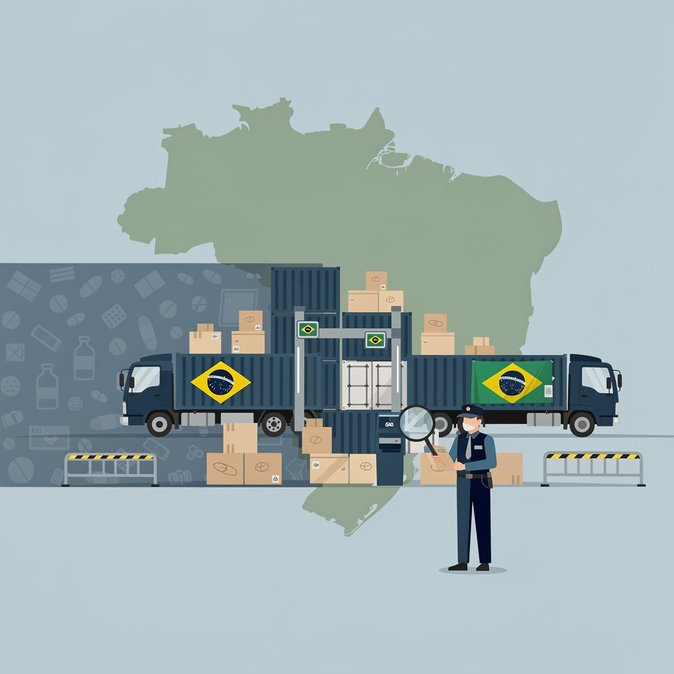
Brazil’s Federal Revenue Service (RFB) has released final results for Operação Fronteira 2026, hailing it as the country’s largest ever customs-enforcement sweep. In a press conference on 16 November—updated on the RFB website on 17 November—officials reported BRL 581.08 million (USD 117 million) in illicit goods and narcotics taken off the market after ten days of coordinated raids along land borders, airports and logistics hubs. The joint action mobilised 608 RFB officers and nearly 1,400 agents from the military, police and regulatory bodies such as Anvisa and the agriculture ministry. Paraguay-Brazil border points in Mato Grosso do Sul accounted for the largest haul, but seizures were recorded in 25 states. Highlights include 70 tonnes of marijuana, 241 kg of cocaine, 16 firearms, 150 rounds of ammunition and BRL 42 million in e-cigarettes. Compared with the 2025 edition, the value of confiscated narcotics surged 360 %, while overall seizures jumped 137 %. Officials credited expanded data-sharing with U.S. Customs and Border Protection and Colombia’s armed forces for identifying high-risk shipments before they crossed into Brazil. For importers and express-courier operators, the operation signals tougher screening over the peak shopping season. Goods diverted for inspection can face multi-week delays, so supply-chain managers should build buffer stock and verify that brokers have updated licences and product classifications. Longer term, the RFB indicated that inter-agency border task forces will move from ad-hoc operations to permanent joint-command centres. Companies that run bonded warehouses or cross-dock facilities near border zones should expect more frequent audits and should refresh compliance training for warehouse staff.