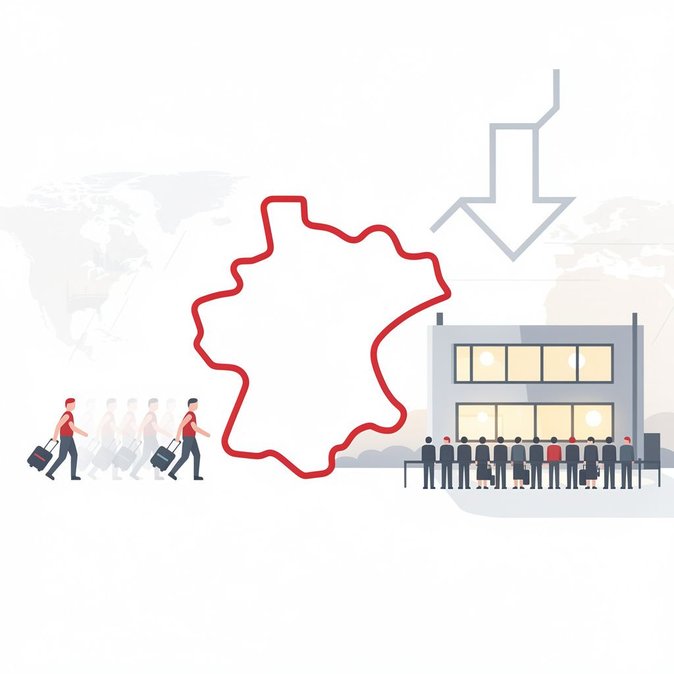
The State Secretariat for Migration (SEM) reported on Tuesday that Switzerland registered 2 210 asylum applications in October 2026—down 433 cases, or 16 %, compared with October 2025. The figures, released on 16 November 2026, confirm a trend that became visible during the summer as arrivals via the Western Balkans and central Mediterranean routes eased. Afghan, Turkish and Eritrean nationals remained the three largest applicant groups, together accounting for almost half of the October caseload. SEM issued 2 502 first-instance decisions during the month, granting refugee status or provisional admission in 37 % of cases. The federal agency also transferred 311 people to other Dublin-area countries responsible for their claims, while receiving 145 transferees from partner states. For global-mobility and corporate-security teams, declining asylum numbers translate into less pressure on federal reception centres and cantonal accommodation, reducing the likelihood of emergency requisitioning of hotels or staff residences near major business hubs. The softer inflow may also ease political tensions ahead of the 2027 referendum on Bilateral III, where migration is expected to dominate the campaign. However, SEM cautions that numbers could rise again if geopolitical conditions deteriorate in North Africa or the Middle East. Employers sending staff to Switzerland should therefore continue to monitor local sentiment and factor possible policy tightening into workforce-planning scenarios. In recent years, spikes in asylum arrivals have prompted cantons to toughen rules on family-reunification timing and access to social housing—all developments that can affect expatriate families indirectly. The October data reinforce SEM’s revised full-year forecast of around 22 000 asylum applications for 2026, down from an earlier estimate of 25 000. Should that forecast hold, Switzerland will post its lowest asylum intake since 2021, freeing administrative resources that can be redirected to long-pending business-immigration files such as EU Blue Card equivalents and quotas for highly skilled third-country nationals.