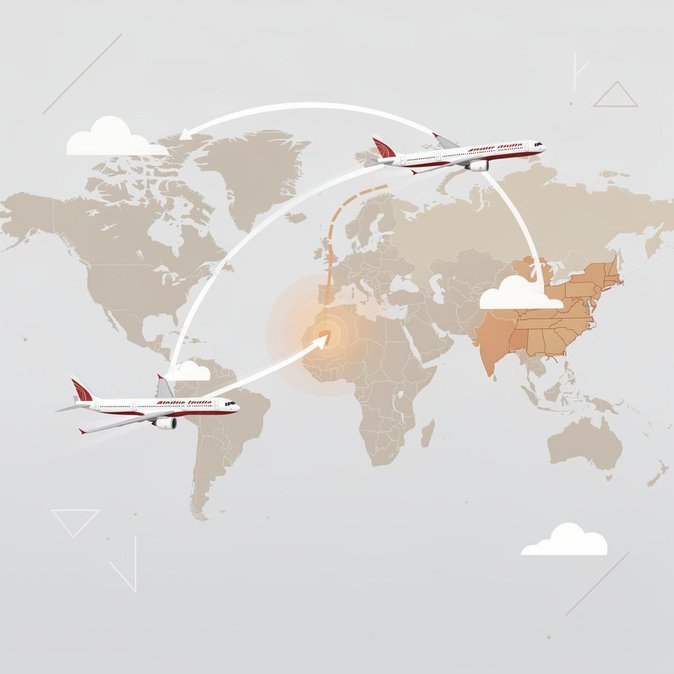
Air India has reinstated true non-stop service on its four India–New York routes after Iraq lifted over-flight restrictions imposed during regional conflict earlier this year. Since March, the carrier had been forced to detour south of Iraq and make a refuelling stop in Rome, adding up to five hours to journeys between Delhi, Mumbai and the US East Coast. The restored routing reduces block time to about 17 hours and saves roughly 10 percent in fuel burn per round trip. Operationally, the change frees Air India from a complex “Rome tech-stop” that required ground-handling contracts, additional crews and contingency slots at Fiumicino. Flight Duty Time Limitations are now comfortably within a single crew pairing, cutting hotel costs and simplifying rostering. Passengers, meanwhile, avoid a midnight de-boarding and re-security process in Rome, improving the premium-cabin experience that Tata-owned Air India is keen to relaunch with its refurbished A350-900s and 777-300ERs. Travel-policy implications are immediate. Many corporate booking tools had shifted high-yield travellers to one-stop Gulf or European hubs after door-to-door times ballooned; with non-stops back, India-headquartered multinationals can reinstate their preferred-carrier contracts and reclaim up to half a working day in transit. Duty-of-care managers should update airspace-risk assessments: flights now traverse Iraq, but conflict-zone monitors rate the corridor acceptable at higher flight levels. Pakistan’s airspace remains closed to Indian airlines, so routings still dogleg over the Arabian Sea, but total flight time is now competitive with United Airlines’ Newark–Delhi service. Cargo shippers also benefit. The Rome stop limited belly-hold payloads and introduced temperature-control challenges for pharmaceuticals. With the fuel penalty gone, Air India expects to add up to eight tonnes of freight per flight, critical for time-sensitive exports ahead of the US holiday season. Given the persistent capacity squeeze on trans-Atlantic freighter routes, the additional belly space may marginally ease spot-rate volatility. The episode underscores the fragility of ultra-long-haul planning in a geopolitically tense world. Yet it also shows how rapidly network economics shift when airspace opens. Mobility teams should monitor NOTAM updates closely; the next conflict-driven closure could again up-end schedules and travel budgets.
Source: Hindustan Times