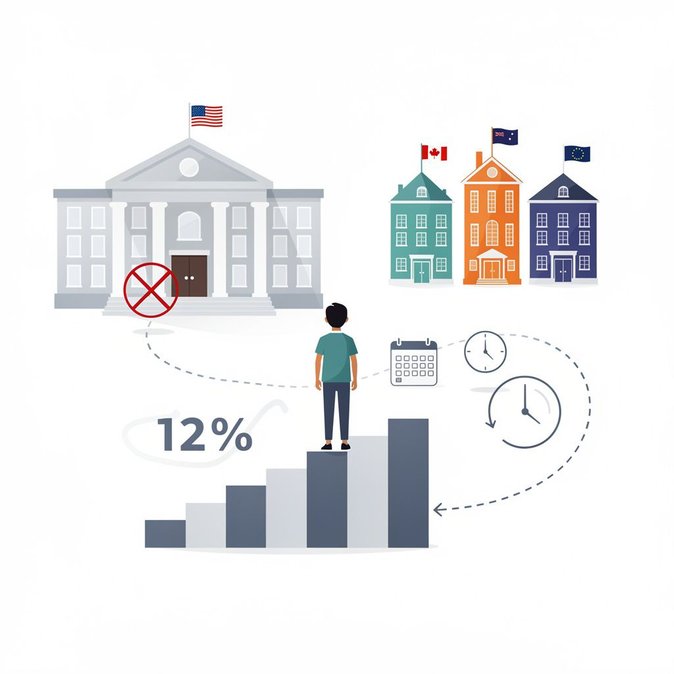
The annual Open Doors report, released on 16 November 2026, highlights a 12 % year-on-year fall in new Indian student enrolments at US universities—the steepest decline in two decades. Indian nationals remain the largest foreign student cohort in the United States, but their numbers slipped from 268,000 to 236,000. Stakeholders attribute the drop to several factors. The re-elected Trump administration has dialled back visa flexibility: consular refusal rates for F-1 student visas issued in India rose to 26 % in fiscal 2026, compared with 18 % a year earlier. The administration also curtailed the STEM Optional Practical Training (OPT) window from 36 to 24 months, reducing post-study work opportunities. In parallel, Canada and Australia have aggressively marketed alternative pathways with post-study work rights extending up to four years. Universities are concerned about revenue. At many public institutions, Indian students pay out-of-state tuition that subsidises domestic programmes. A 12 % fall represents roughly US $1.4 billion in lost tuition and living-expense inflows. Mobility advisers note that family-sponsored education often precedes intra-company transfers; a smaller pipeline could tighten future talent pools for multinational employers operating in India and the US. Practical advice for Indian applicants: apply early, prepare thorough documentation to demonstrate economic and social ties, and consider campus jobs or assistantships that show genuine academic intent. Corporate mobility teams that sponsor employees for US graduate programmes should anticipate longer lead times and budget for potential re-applications. Parallel strategies—such as enrolling staff in Canada or European Union master’s courses—may mitigate risk. Indian policy-makers are watching closely. A senior official at the Ministry of External Affairs told reporters that India will raise “processing transparency” concerns in the next Quadrilateral Working Group on Student Mobility with the US. Whether that yields relief before the Fall 2027 intake remains uncertain.
Source: Associated Press