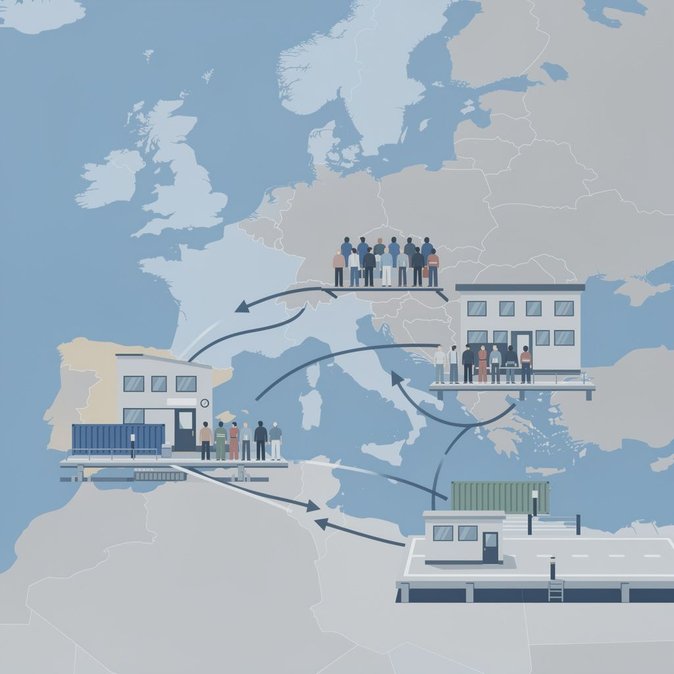
A deep-dive analysis by the Associated Press traces how the European Union moved from ad-hoc bilateral ideas to a formal blueprint for offshore “return hubs” that would process or detain migrants rejected by member states. The timeline singles out Italy’s 2023–24 deal with Albania—under which two facilities near Shëngjin host up to 3,000 migrants intercepted in international waters—as the pilot that encouraged Denmark, Austria and others to pursue similar arrangements with Rwanda and Serbia. While the Meloni government hails the Albania centres as proof that externalisation works, critics note that Italian courts initially blocked mass detentions and that only about 120 transferees have passed through the sites so far. Nevertheless, the June 2026 EU migration-pact agreement explicitly allows individual or coalition deals with third countries, provided asylum-processing standards are met. For corporate mobility programmes the prospect of multi-country hubs could complicate duty-of-care assessments: assignees posted to Albania or neighbouring logistics corridors may see increased security measures, and EU residence applicants could face longer waits as resources shift to enforcement. Italy’s Foreign Ministry is reportedly exploring additional capacity in North Africa to pre-screen seasonal-labour applicants—part of the Flussi 2027 plan—but any expansion hinges on EU funding and partner-country consent. Businesses should monitor national implementing acts expected by March 2027; these will determine whether carriers must update passenger-data sharing with hub countries, affecting travel-booking systems and compliance costs.
Source: Associated Press