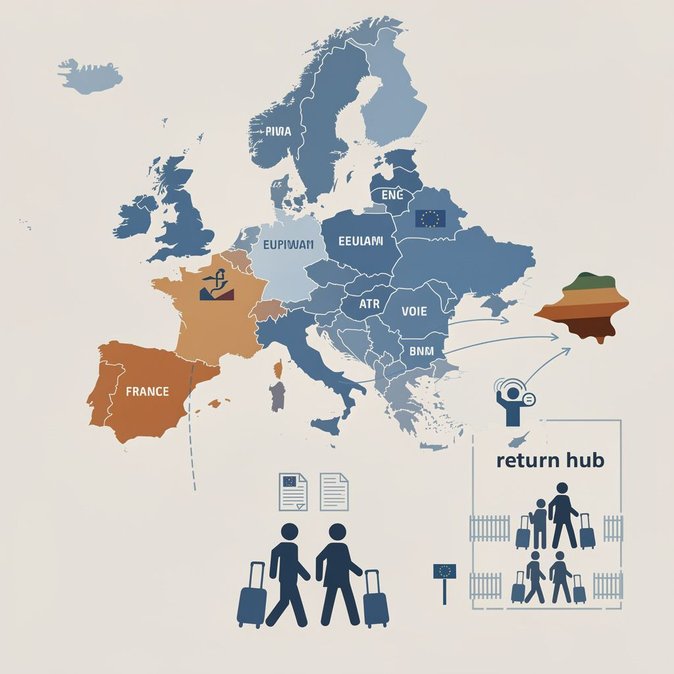
Germany, Austria, Denmark, Greece and the Netherlands announced on 17 November that they will create a pilot ‘return hub’ in Rwanda to which rejected asylum-seekers can be transferred. The initiative, hailed by supporters as a test of off-shore processing within EU law, pointedly excludes France. President Emmanuel Macron reiterated that such outsourcing is “neither effective nor in line with our values,” according to diplomats quoted by Le Monde. The five countries plan to send up to 100 individuals—roughly 20 per state—to the Rwandan centre, which Kigali says will offer residence permits and integration support. The project relies on the new EU Regulation on Returns adopted in October and echoes earlier UK and Italian schemes. Human-rights groups warn Rwanda has a poor rights record, and legal challenges are expected. France’s refusal reflects domestic politics in the run-up to the 2027 presidential election, where centrist and left-wing parties oppose hard-line migration measures. Paris instead favours stepped-up Frontex operations and bilateral readmission deals. For multinationals relocating staff within Europe, the split signals that asylum and migration policy may fragment further, increasing compliance complexity across the bloc. Companies employing third-country nationals should monitor whether the hub gains EU funding or prompts mirror arrangements elsewhere; workers transiting France are unlikely to be affected directly, but divergent national stances could influence Schengen internal-border controls that remain in place until at least April 2027.
Source: Le Monde