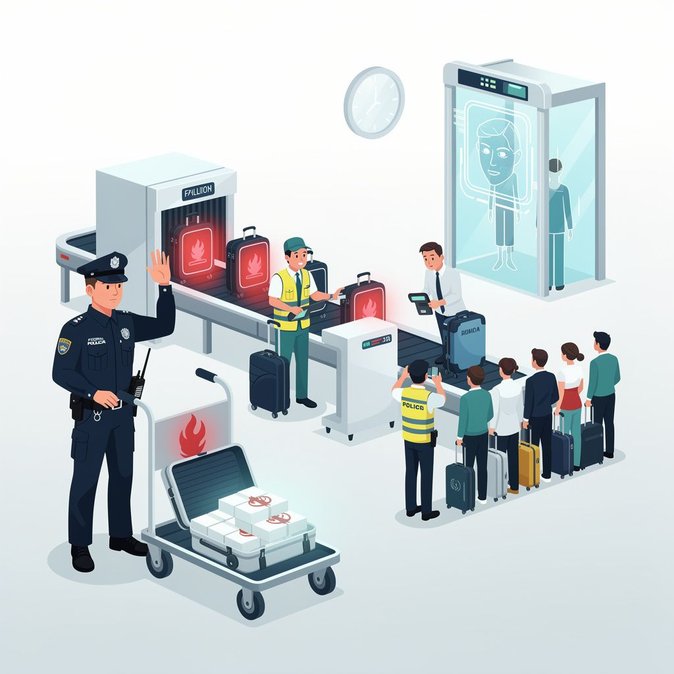
Brazil’s Federal Police executed Operation Taxiway on 18 November, dismantling a ring that infiltrated service personnel at São Paulo/Guarulhos International Airport to load cocaine into the holds of long-haul flights. Search and seizure warrants were served in five municipalities and at the homes of baggage-handling staff accused of tampering with luggage tags and inserting suitcases stuffed with drugs after security screening. According to the PF, the investigation began in September when Customs officers intercepted a pick-up truck inside the air-side area carrying two suitcases and a hard case containing 107 kg of cocaine. Surveillance footage allegedly shows ground employees using service vehicles to bypass scanners. Eight people have been arrested so far, including a supervisor with access to the sterile zone. For global mobility teams, the immediate concern is operational disruption: the airport authority has activated a heightened security level that requires secondary screening for all staff and random inspections of baggage already cleared by the airlines. Airlines have warned corporate travel managers to allow an extra 30–45 minutes for check-in of international flights out of GRU through 25 November while new access badges are re-issued. The case underscores persistent vulnerabilities at Latin America’s busiest cargo hub and may accelerate the rollout of biometric access controls mandated by ANAC Resolution 813/2026, which enters into force next week. Logistics providers exporting high-value samples or time-sensitive clinical material should revisit Chain of Custody clauses and ensure tamper-evident seals are used even on domestic feeder legs. Legal analysts also point to tougher individual-liability provisions: since the 2025 reform of Brazil’s Drug Law, knowingly facilitating drug export can trigger sentences of up to 25 years, and employers that fail to vet subcontractors risk multi-million-real fines under the Corporate Anti-Crime Act.
Source: Polícia Federal