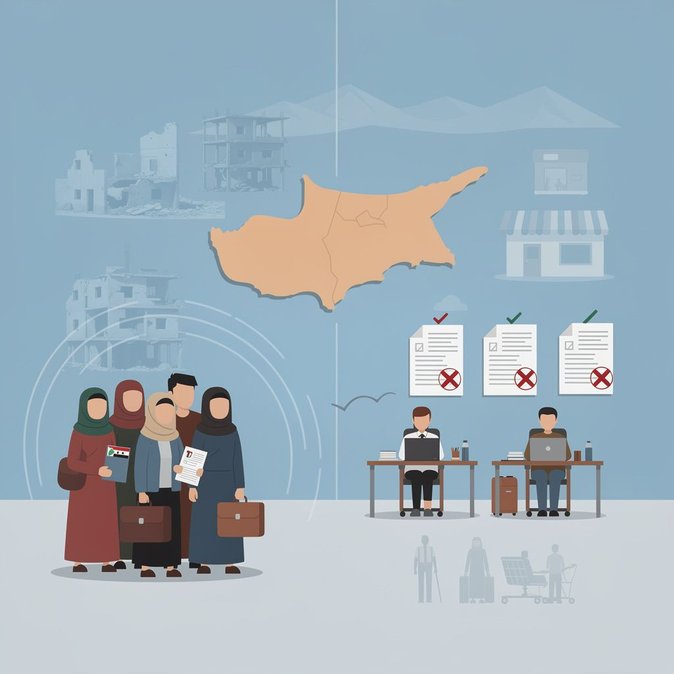
A prime-time documentary aired by Syria TV on 19 November has reignited debate over how Cyprus treats Syrian protection seekers. The programme cited ministry data showing more than 5,200 Syrian applications refused since Damascus changed hands in early 2026, alongside cases where subsidiary protection has been revoked. Migration analyst Khalaf Al-Housho told viewers the policy shift amounts to "psychological pressure" on a community estimated at up to 9,000 young men and several thousand family members. Cypriot officials privately counter that security conditions in parts of Syria have ‘fundamentally improved’, obliging them under EU law to re-examine protection status. They also point to mounting capacity issues: asylum claims have quadrupled since 2019 while reception centres remain overstretched. To manage flows, Nicosia has introduced stricter admissibility interviews at Pournara first-reception centre and launched an Assisted Voluntary Return Scheme offering €1,000 per adult. The broadcast highlighted real-world dilemmas for Syrians integrated into Cypriot society. Visiting Syria for weddings or funerals can now trigger status withdrawal; yet families worry that revocation would leave children born in Cyprus effectively stateless. Legal NGOs advise clients to document medical needs, schooling records and tax payments to strengthen renewal files. Employers, especially in construction and agriculture, fear losing experienced staff if permits lapse. From a corporate-mobility viewpoint, the story underscores the importance of scenario planning. Companies with Syrian employees on subsidiary protection should budget for legal fees and be ready to sponsor work permits under the fast-track third-country national scheme, should protection be withdrawn. International NGOs meanwhile warn that sudden waves of returns could unsettle the island’s labour market just as major infrastructure projects ramp up. Whether the publicity leads to policy adjustments remains to be seen, but diplomats note that Nicosia is sensitive to reputational risk ahead of 2027 EU pact implementation reviews. Expect closer cooperation with EASO screening teams and, potentially, bespoke bilateral readmission arrangements with Syrian interim authorities.
Source: Sigmalive English