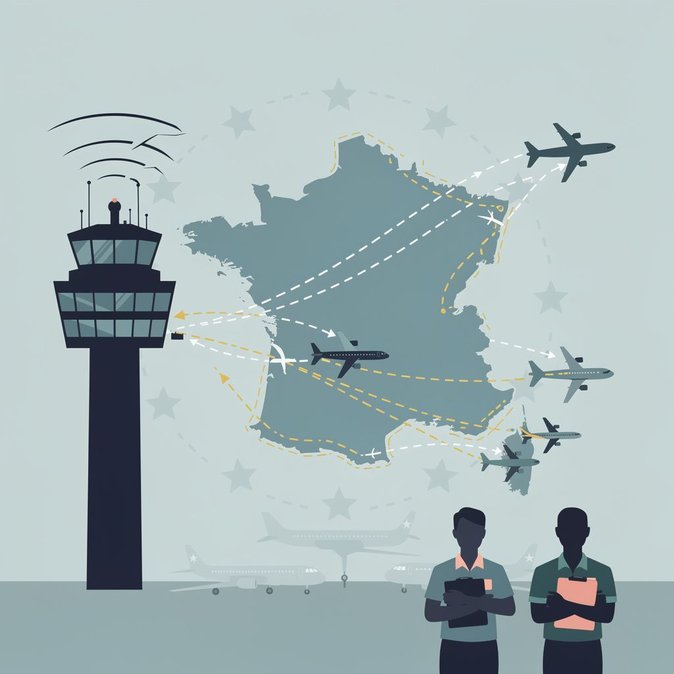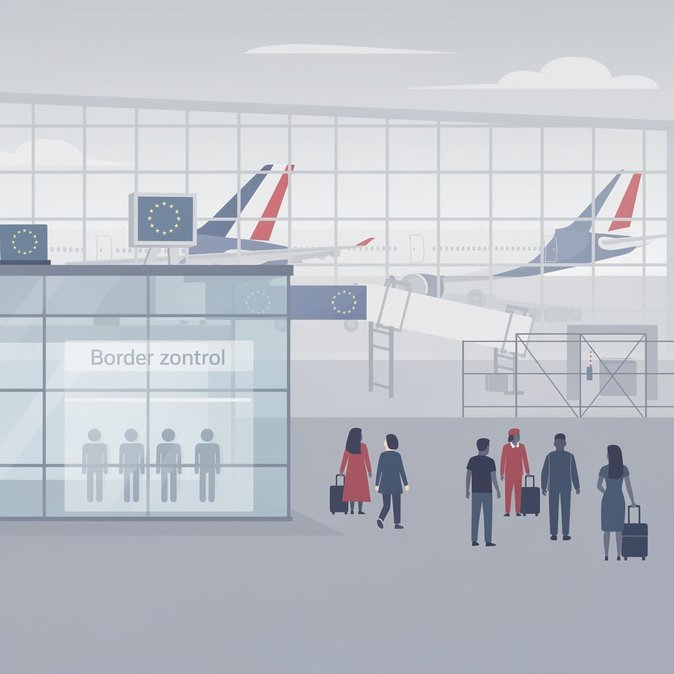
Appearing before the Senate Law Committee on 18 November, Interior Minister Laurent Nuñez conceded that France’s new ‘asylum at the border’ screening mechanism—introduced in June 2026 under the EU Pact on Migration and Asylum—has not worked as intended. Because Parliament has yet to pass enabling legislation that would allow authorities to hold non-threatening applicants in secure zones, most are housed in airport hotels where they simply leave before their cases are heard. 1. The numbers. Senator Nadine Bellurot, rapporteur for the immigration-budget line, reported after an unannounced visit to Paris-Charles de Gaulle that “90 % to 95 %” of applicants abscond within days. Ministry officials confirmed the figure, blaming a “legal vacuum”: current French law permits detention only when a threat to public order is established, a threshold rarely met at initial screening. 2. How did this happen? The EU Pact obliges member states to conduct accelerated checks—including biometrics—at external borders and major airports. France transposed many technical aspects by decree but failed to secure Assembly approval for a broader bill empowering temporary deprivation of liberty. With the 12-June implementation deadline past, prefectural police improvised by booking commercial hotels near CDG and other hubs. 3. Business-travel implications. CDG is Europe’s second-busiest corporate-travel hub. While the absconding issue concerns asylum seekers, the political fallout could prompt tougher controls on all non-EU arrivals, including business visitors. Senator Bellurot has already called for “systematic police escorts” between biometric booths and holding zones—a move that could slow passport queues just months before the 2027 Rugby League World Cup in France. 4. What’s next? Nuñez promised a new draft law “within weeks,” but opposition parties dispute whether ordinary hotels can ever be considered a place of detention. Until a solution is enacted, border police will rely on voluntary compliance, raising reputational questions for France as it seeks to balance security with the free movement principles of Schengen. For multinational employers, the episode is a reminder that immigration reforms made at EU level can founder on domestic legal constraints, creating unpredictable operational hurdles at gateways critical to global mobility.
Source: Public Sénat
How VisaHQ can help
VisaHQ simplifies the visa application process for individuals and businesses. Check current travel requirements, prepare the required documents and manage your application online through the VisaHQ France portal.More From France
View all
France streamlines residence-permit rules and raises minimum wage, impacting global mobility programs
French transport regulator approves €8.2 billion expansion of Paris-CDG and Orly, clearing the way for dozens of new passport-control posts