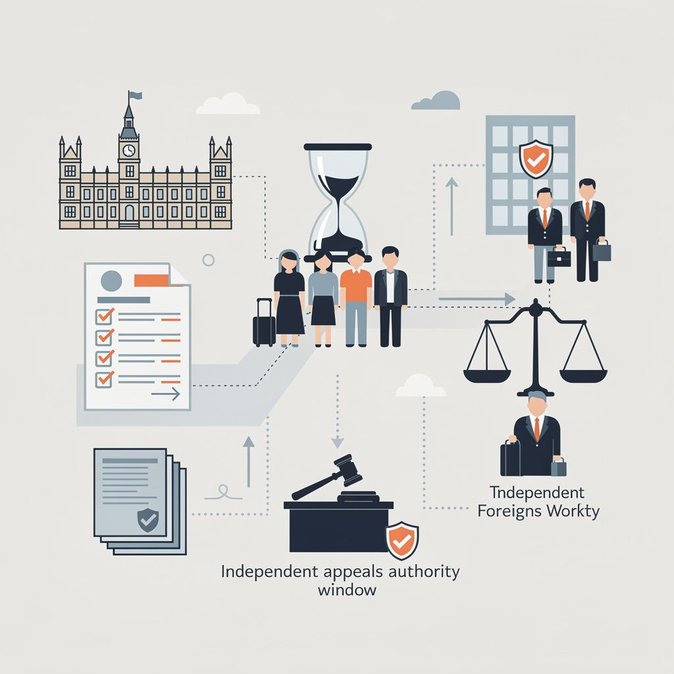
The House of Commons has given the government’s flagship Immigration and Asylum Bill its third-reading seal of approval, sending the wide-ranging package of reforms to the House of Lords for further scrutiny. Home Secretary Shabana Mahmood hailed the 290–94 vote as “the most significant step yet” in her plan to create an immigration system that is, in her words, “firm but fair”. The Bill bundles together new powers to accelerate asylum decisions, tighten modern-slavery protections and overhaul the appeals process through the creation of an Independent Immigration Appeals Authority. One of the most controversial Commons amendments scraps the current five-day notice period that must elapse before failed asylum-seekers can be removed. Instead, Immigration Enforcement officers will have a rolling six-month window in which to carry out removals without issuing fresh warning letters, a change ministers argue will close a loophole that triggers last-minute legal bids to delay deportation. Business travel managers should note that expedited removals could reduce the time available to retrieve company property or settle outstanding employment matters for assignees whose claims are refused. For employers, the Bill also defines how Article 8 of the European Convention on Human Rights should be applied in immigration cases. By codifying what counts as a “proportionate” interference with family life, the government hopes to cut the number of human-rights challenges that have slowed deportations in recent years. Companies sponsoring workers on family-dependent visas will need to watch carefully for guidance once secondary legislation is tabled. Modern-slavery provisions are being tightened, too. A statutory definition of a “bad-faith” claim will allow the Home Office to refuse protection where applicants are found to have deliberately withheld information until just before removal. Nearly 80 % of National Referral Mechanism (NRM) referrals last year involved people already subject to immigration control, and ministers insist the changes will protect genuine victims while deterring abuse. If the Lords passes the Bill unchanged, recruitment for the new appeals body’s chair will begin early in 2027. Multinationals should factor possible procedural changes—and potentially faster negative decisions—into risk assessments for high-volume mobility programmes. In the meantime, immigration advisers recommend auditing existing assignments to ensure documentation is watertight before the tougher enforcement regime takes effect.
Source: UK Government – GOV.UK