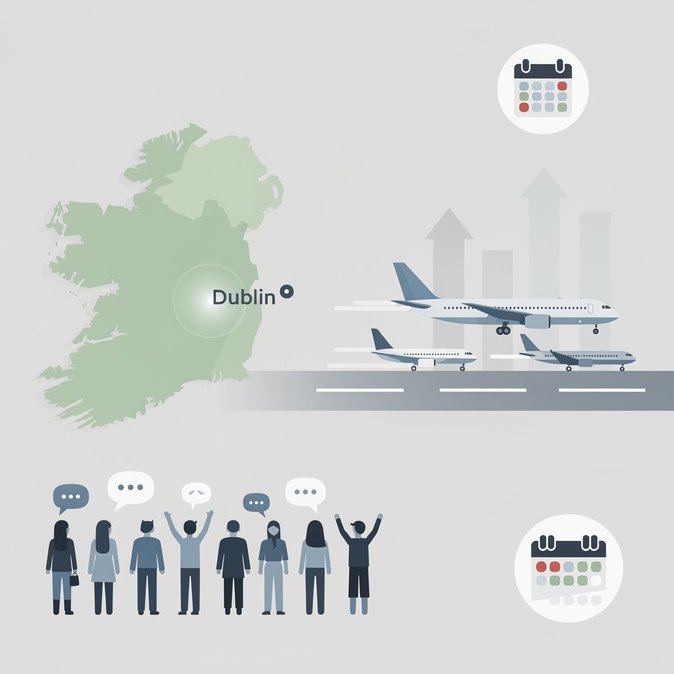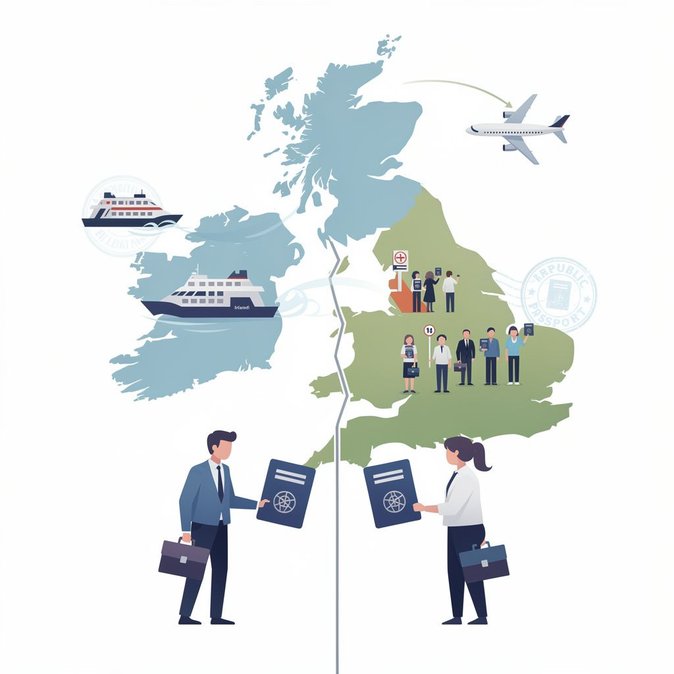
The UK House of Commons Northern Ireland Affairs Committee has launched a sweeping inquiry into how the Common Travel Area (CTA) is functioning in the face of rising irregular migration and newly introduced passport requirements on some ferry and airline routes. Announced on 19 November, the probe will examine whether stronger controls are needed on the land border while safeguarding the right of Irish and British citizens to move freely. Committee chair Tonia Antoniazzi MP said earlier evidence sessions revealed a “lack of comprehensive data” on migration through Northern Ireland and concerns that Channel-crossing enforcement is displacing routes via the Republic. Operators such as Stena Line and Ryanair have already begun mandating passports for all passengers, citing Home Office guidance—moves Irish politicians warn could undermine the CTA’s principles. For Irish-based companies, any tightening of checks at airports, seaports or the open land border could add friction to cross-border commutes that underpin sectors from financial services in Dublin-Belfast corridors to pharmaceutical manufacturing in Dundalk–Newry clusters. Talent on assignment between the two jurisdictions currently relies on photo ID rather than passports; future recommendations could change onboarding documentation and HR compliance procedures. The committee is calling for written submissions by 15 January 2027 and will report later next year. Mobility managers with cross-border staff should monitor the inquiry and be ready to adjust travel policies, especially if carriers extend passport mandates or if the Home Office pilots electronic travel authorisations for movements originating in the Republic. The inquiry’s timing is significant: it overlaps with Ireland’s EU Presidency debates on Schengen reform and comes just weeks after the British-Irish Intergovernmental Conference reaffirmed its goal of a “frictionless border”. Stakeholders on both sides now have an opportunity to influence how security and openness will be balanced for decades to come.
Source: UK Parliament