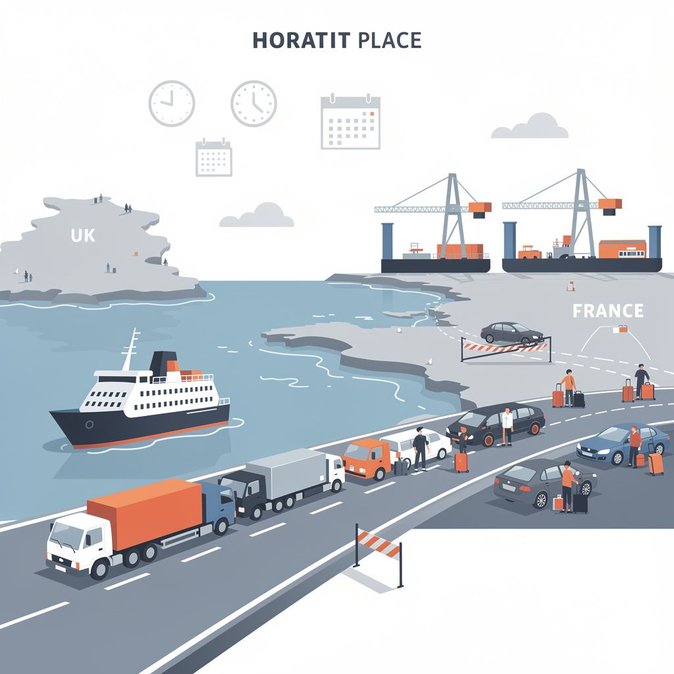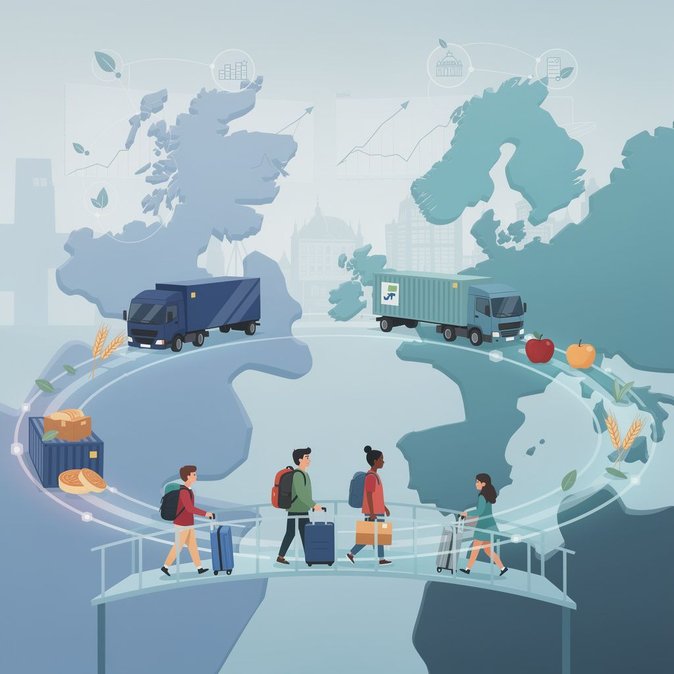
A decade after the Brexit referendum and six years after the divorce became final, the United Kingdom and the European Union have agreed a package of measures that will immediately smooth the movement of goods and young professionals across the Channel. Announced at Friday’s EU-UK summit in Brussels, the deal removes sanitary and phytosanitary (SPS) checks on plant and animal products, paves the way for mutual recognition of emissions-trading allowances, and—most eye-catching for the corporate mobility community—launches a bilateral Youth Mobility Scheme permitting up to 100,000 Britons and EU citizens aged 18-30 to live and work in each other’s jurisdictions for up to three years. For exporters of perishable goods, scrapping SPS checks will slash administrative time and reduce supply-chain risk as the busy Christmas season approaches. Logistics companies told the Financial Times that the change could cut door-to-door delivery times by 24–48 hours on key GB-EU lanes and save large food producers “six-figure sums” in compliance costs in 2027 budgets. The government confirmed that the arrangement will be written into the UK Border Target Operating Model, allowing trusted-trader accreditation to replace most documentary checks for British hauliers within weeks. Equally significant is the pilot Youth Mobility Scheme. Unlike the existing Youth Mobility visas the UK operates with a handful of Commonwealth partners, the new agreement is fully reciprocal and grants a generous three-year stay with full work rights and no sectoral caps. Employers ranging from tech scale-ups in Manchester to engineering firms in Stuttgart welcomed the talent pipeline at a time of record labour shortages. Immigration lawyers caution that applicants will still need to meet standard suitability requirements and pay visa fees, but the quota of 100,000 per side is far higher than industry had dared hope. Both sides also agreed to open talks on aligning university tuition fees and professional qualifications within six months—a sign that further liberalisation of people movement is on the table. Prime Minister Andy Burnham called the summit “a historic turning point” and said “nothing is off the table” when asked whether the UK could one day re-enter the EU single market for services. While that prospect remains distant, Friday’s agreements mark the most substantive thaw in post-Brexit relations to date and give multinationals a concrete framework for cross-border assignments in 2027 and beyond.
Source: Associated Press