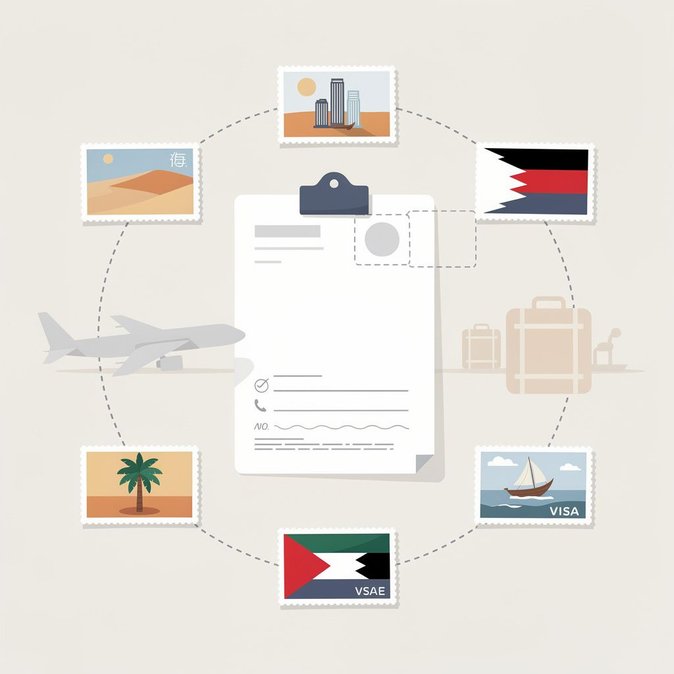
Regional hopes for a Schengen-style Gulf Cooperation Council (GCC) tourist visa received a dose of reality on 21 November 2026 when trade publication Travel and Tour World reported that none of the six member states—Bahrain, Kuwait, Oman, Qatar, Saudi Arabia and the United Arab Emirates—has opened an application portal or published fees. The single-visa concept was endorsed at the GCC Interior Ministers’ summit in Doha back in December 2023, with a target “within three years,” but practical rollout has since stalled. Officials contacted by the magazine said interior ministries, rather than tourism boards, now control implementation. Sources blamed differing security vetting standards, revenue-sharing formulas and the complexity of linking six biometric border systems. The visa is widely viewed as a cornerstone of the Gulf’s ambition to capture 128 million visitors by 2030 and to encourage multi-country itineraries that spread economic benefits beyond established hubs such as Dubai. For multinationals the delay keeps existing visa mosaics in place. A traveller flying into the UAE still needs separate e-visas or visas-on-arrival for onward meetings in Saudi Arabia or Kuwait, adding cost and administrative friction. Tour operators have likewise paused marketing of “Grand Gulf” circuits pending clarity on validity periods and overstay penalties. Analysts say momentum could return once Saudi Arabia completes the next phase of its e-visa platform and Qatar finishes integrating its Hayya system with GCC security databases. However, even an initial soft-launch limited to low-risk nationalities would require treaty-level agreement on data-sharing and overstayers, something diplomats quietly admit is unlikely before late 2027. Until then, travel managers are advised to keep passport-specific matrices up to date and to budget two to four weeks for multiple entry clearances during peak seasons.
Source: Travel and Tour World